
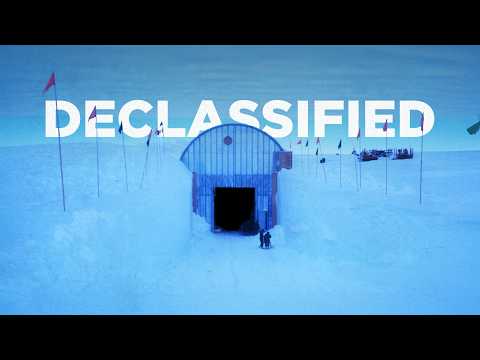
Camp Century, a secret U.S. military base built under Greenland's ice during the Cold War, aimed to house nuclear missiles and conduct psychological experiments. Despite its ambitious design, the project faced insurmountable challenges, leading to its abandonment. Recent discoveries reveal the camp's legacy, including concerns over toxic waste as climate change accelerates ice melt, raising questions about environmental responsibility and military history.
In 1959, a unique military installation was established in one of the harshest environments on Earth: Camp Century, an underground city in Greenland. This facility, shrouded in secrecy, was not just a military base but a prototype for future Arctic cities. It was designed to house nuclear missiles and conduct psychological experiments, all while operating under extreme conditions. This blog post explores the fascinating history of Camp Century, its ambitious goals, and the implications of its legacy today.
Imagine being a soldier in an underground barracks, surrounded by 200 fellow soldiers, living in a world devoid of daylight and filled with the hum of a portable nuclear reactor. Camp Century was equipped with essential facilities, including a church, hospital, and living quarters, all buried beneath the ice. The water supply was ingeniously sourced from melted glacial ice, and the camp operated under extreme cold, with temperatures plummeting to -50° C.
Initially presented to the public as a research station focused on glaciology and human survival in extreme conditions, the true purpose of Camp Century was far more strategic. It was part of Project Iceworm, which aimed to create a vast network of tunnels capable of housing over 600 nuclear missiles, hidden beneath the ice to evade detection by the Soviet Union.
Greenland's geopolitical significance has long been recognized. In 1946, the U.S. attempted to purchase Greenland from Denmark, citing its strategic location between the U.S. and Russia. Although the purchase was declined, a defense agreement was established in 1951, allowing the U.S. to build military bases in Greenland, including the Thu Air Base.
The Cold War era was marked by intense rivalry between the U.S. and the Soviet Union, particularly following the launch of Sputnik in 1957. This event heightened American fears of Soviet missile capabilities, prompting the military to propose the construction of Camp Century as a means to counteract potential threats from the North.
Building Camp Century was no small feat. The construction took place over two summers, utilizing innovative engineering techniques to carve tunnels beneath the ice. Swiss-made snow milling machines, known as Peter plows, were employed to dig trenches, which were then covered with metal sheets and snow to create insulated tunnels.
Despite the extreme environment, Camp Century was designed to be livable. A ventilation system maintained temperatures at -15° C to prevent melting, and a portable nuclear reactor provided power. The camp also featured a unique water supply system, where a heat element melted ice to create a reservoir of drinkable water.
Beyond its military objectives, Camp Century served as a psychological experiment to assess the ability of soldiers to live in isolation. The U.S. Army was particularly interested in understanding how personnel would cope with extreme conditions, as they prepared for future space missions. The results were promising, with soldiers managing to maintain order and camaraderie despite the isolation.
Despite its ambitious goals, Camp Century faced significant challenges. The shifting ice sheet caused structural issues, leading to the eventual abandonment of the base in 1966. By 1969, the camp was in ruins, reclaimed by the ice that had once sheltered it.
Decades later, the legacy of Camp Century has resurfaced amid concerns about climate change. In 2016, it was discovered that the U.S. had left behind toxic radioactive waste when the camp was abandoned. As the ice melts, there are fears that this waste could re-emerge, posing environmental risks.
Recent advancements in technology have allowed scientists to rediscover the remnants of Camp Century. In 2024, radar mapping revealed the distinct tunnels of the camp, now distorted but still present beneath the ice. This discovery has reignited discussions about the environmental responsibilities associated with military operations in sensitive areas.
Camp Century stands as a testament to Cold War excess and the lengths to which the U.S. government was willing to go in the name of national security. Its story is not just one of military ambition but also a cautionary tale about the environmental impact of such endeavors. As climate change accelerates, the legacy of Camp Century serves as a reminder of the interconnectedness of military history and environmental stewardship, raising important questions about our responsibilities to the planet and future generations.



















