
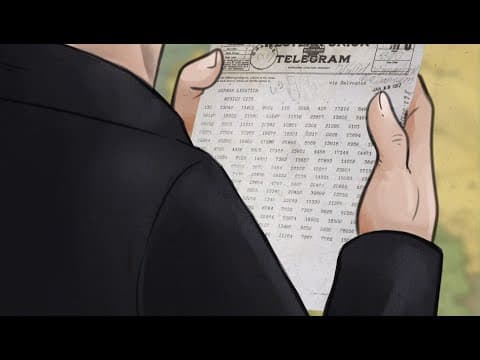
The Zimmermann Telegram was a secret communication from Germany to Mexico proposing a military alliance against the United States during World War I. Its interception and decoding by British intelligence shifted American public opinion and led to the U.S. entering the war, marking a pivotal moment in the conflict.
During World War I, a significant event unfolded that would alter the trajectory of the conflict and the future of international relations. This event was the sending of the Zimmermann Telegram, a secret message from Germany to Mexico that proposed a military alliance against the United States. This article explores the context, implications, and consequences of this pivotal moment in history.
World War I was a massive military conflict that pitted the Central Powers against the Allies. The war was characterized by trench warfare and a complex web of alliances. As the war progressed, communication became a crucial element in military strategy. The Allies, particularly Great Britain, had a significant advantage in telecommunications, primarily due to their control over the vast network of undersea telegraph cables that facilitated global communication using Morse code.
At the onset of the war, the British severed all but one of Germany's transatlantic cables, severely limiting Germany's ability to communicate with its allies. Consequently, the Central Powers had to rely on neutral or Allied countries to relay their encrypted messages. This included the United States, which, at the time, was maintaining an isolationist stance under President Woodrow Wilson.
In January 1917, as the war continued and tensions rose, German Foreign Secretary Arthur Zimmermann sent a coded telegram to James Gerard, the U.S. ambassador to Germany. The telegram contained a proposal for Mexico to join forces with Germany against the United States. In return, Germany promised to help Mexico regain the territories it had lost during the Mexican-American War, specifically Texas, New Mexico, and Arizona.
Gerard, believing the message to be a routine diplomatic communication, forwarded the telegram to Copenhagen. From there, it was sent to London and eventually reached Washington, D.C. However, by the time it arrived in Mexico City, British cryptologists had already decoded the message. The British military hierarchy decided to keep the information secret to avoid revealing that they were intercepting U.S. communications and that they had successfully broken the German code.
The revelation of the Zimmermann Telegram had a profound impact on American public opinion. Initially, the U.S. had favored an isolationist policy, but the contents of the telegram stirred fears of a direct threat from Germany. As news of the telegram spread, public sentiment began to shift towards supporting U.S. involvement in the war.
On April 2, 1917, President Wilson declared war on Germany, marking a decisive turning point in the conflict. The entry of the United States into World War I provided the Allies with fresh troops and resources, ultimately contributing to their victory.
The Zimmermann Telegram serves as a compelling example of the importance of intelligence and communication in warfare. It highlights how espionage and the interception of messages can significantly influence the course of history. The decision by British intelligence to decode and withhold the telegram's contents until the right moment played a crucial role in shifting American public opinion and leading to the U.S. entering World War I. This event underscores the intricate interplay between diplomacy, communication, and military strategy during one of the most significant conflicts in modern history.



















