
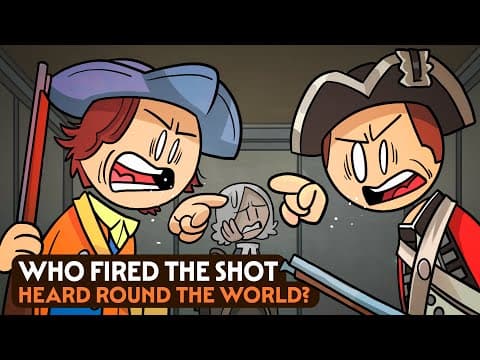
On April 19, 1775, the first shot of the American Revolutionary War was fired in Lexington, Massachusetts. This blog post explores the conflicting accounts of who fired that shot, examining testimonies from both the Lexington militia and British soldiers, and the historical implications of this pivotal moment in American history.
On April 19, 1775, at 5:00 a.m., the quiet town of Lexington, Massachusetts Bay Province, was on edge. Rumors of an approaching threat filled the air, and the local militia, led by Captain John Parker, had gathered in anticipation. As the British light infantry, clad in their iconic red jackets, approached, a moment unfolded that would forever be etched in American history—the shot heard round the world. But who fired that shot? This blog post delves into the conflicting accounts surrounding this pivotal moment, examining testimonies from both the Lexington militia and British soldiers.
By April 1775, Massachusetts Bay was a British colony in name only. American revolutionaries had effectively seized control of local militias, courts, and legislatures, confining royal authority to Boston. The British, determined to disarm the colonists, dispatched a force of 700 elite soldiers on a secret night march to Concord to destroy militia supplies and apprehend revolutionary leaders. However, the alarm had already been raised, partly due to the efforts of patriot Paul Revere.
As the British troops reached Lexington, they confronted Captain Parker's militia on the town common. The following points are agreed upon by eyewitnesses:
While these facts are clear, the question of who fired first remains a matter of dispute.
In the aftermath of the confrontation, the Revolutionary Congress sought to gather eyewitness accounts, aware of the propaganda value of the incident. The militia's testimonies emphasized that they were not seeking bloodshed and were in fact dispersing when fired upon by the British. Key testimonies include:
These accounts painted a picture of the militia as innocent victims of an unprovoked attack.
In contrast, the British soldiers provided a different narrative. Major John Pitkaren, the commander of the regulars, claimed he ordered his men not to fire and that shots were fired at them first by the militia. Other British witnesses corroborated this, stating that some militia men fired from behind walls and buildings as the British advanced. Key testimonies include:
These accounts suggest that the initial shot may have come from an observer rather than either side directly involved in the confrontation.
Fifty years later, in 1825, as the United States prepared to celebrate the anniversary of the Revolutionary War, some witnesses began to alter their accounts. Militia men who had been present at Lexington were asked to retell their stories, and discrepancies emerged:
These changes reflect a shift from portraying the militia as innocent victims to proud patriots standing their ground against British aggression.
The question of who fired the first shot at Lexington may never be definitively answered. The conflicting testimonies, the influence of time on memory, and the pride of the townspeople all contribute to the complexity of this historical moment. As we reflect on this pivotal event, it serves as a reminder that history is often shaped by perception and the fallibility of human memory. The shot heard round the world remains a symbol of the struggle for independence, but its true origins may forever remain shrouded in mystery.



















