
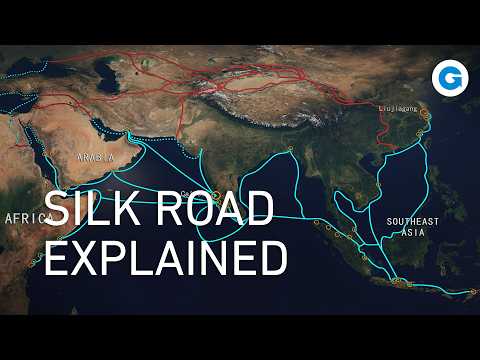
The Silk Road was not just a trade route; it was a catalyst for cultural exchange, technological innovation, and military evolution that shaped the course of history across Eurasia. From the rise of empires to the spread of ideas and diseases, the Silk Road's legacy continues to influence our world today.
Eurasia, the world's largest landmass, stretches approximately 10,000 kilometers from the Pacific to the Atlantic oceans. Despite this formidable distance, human beings have pursued one of history's greatest enterprises: the Silk Road. This trade route was not only tremendously profitable but also a conduit for exotic goods, new technologies, conquering armies, and brilliant ideas. The Silk Road helped build and break empires, fueled revolutions, drove explorations, and forged powerful bonds between distant peoples. This blog post explores the multifaceted impact of the Silk Road on human civilization.
Two thousand years ago, the Roman Empire was at its zenith, having conquered much of Europe and extending its reach into the Middle East, the gateway to Asia's riches. However, the journey east was fraught with peril, as evidenced by the Battle of Carrhae in 53 B.C.E., where the Parthian cavalry defeated a much larger Roman force. This battle marked the beginning of a fascination with silk, as Romans began to covet Chinese silk, leading to the establishment of trade routes that would become known as the Silk Road.
Long before the Romans and Parthians clashed, trade between Eurasian peoples was already shaping lives and changing the world. The domestication of horses in Central Asia around 3500 B.C. revolutionized transportation and warfare, paving the way for the rise of cavalry. The introduction of the recurved composite bow and socketed arrowheads further enhanced the effectiveness of mounted warriors, allowing for coordinated military tactics that would dominate the battlefield.
The combination of the recurved bow and socketed arrowheads created a new kind of warrior: the horse archer. This innovation allowed mounted warriors to shoot accurately while riding, transforming military strategies across Eurasia. The Xiongnu, a nomadic group from Central Asia, exemplified this new military prowess, raiding Chinese villages and disrupting trade routes.
To counter the Xiongnu, the Chinese military adapted by developing their own cavalry, learning to shoot the recurved bow and crossbow from horseback. This adaptation led to significant military victories, allowing China to expand its territories and secure trade routes, further enhancing the Silk Road's importance.
During the height of the Roman Empire, Silk Road trade flourished, with caravans transporting goods like silk, jade, and spices across vast distances. The Kushan Empire played a crucial role in this trade, facilitating exchanges between East and West. The Jade Gate became a significant trading post, where Chinese aristocrats sought jade for its beauty and supposed protective qualities in the afterlife.
In the 4th century C.E., the Huns and later the Mongols would further alter the landscape of Eurasian trade. The Mongols, often viewed as brutal conquerors, also established the Pax Mongolica, a period of relative peace that allowed trade to flourish along the Silk Road. This era saw an unprecedented exchange of goods, ideas, and cultures between East and West.
The Silk Road was not just a conduit for goods; it was also a pathway for ideas. The introduction of gunpowder, initially developed in China, revolutionized warfare in Europe. The Battle of Crécy in 1346 marked one of the earliest uses of gunpowder weapons on a European battlefield, changing the nature of warfare forever.
However, the Silk Road also facilitated the spread of diseases, most notably the Black Death, which decimated Europe's population in the 14th century. This catastrophic event led to significant social and economic changes, including the rise of the middle class and advancements in technology and labor-saving devices.
The aftermath of the Black Death saw a rebalancing of power in Europe, with surviving workers demanding higher wages and better working conditions. This shift laid the groundwork for the rise of a new economic order and the eventual emergence of the Renaissance.
Today, the legacy of the Silk Road continues to influence global trade and cultural exchange. Initiatives like China's One Belt, One Road aim to revive the ancient trade routes, connecting countries across Eurasia and fostering economic cooperation.
The Silk Road was more than just a trade route; it was a catalyst for cultural exchange, technological innovation, and military evolution that shaped the course of history across Eurasia. From the rise of empires to the spread of ideas and diseases, the Silk Road's legacy continues to influence our world today. As we look to the future, the ancient tale of the Silk Road serves as a reminder of the interconnectedness of human civilization and the enduring impact of trade and cultural exchange.



















