
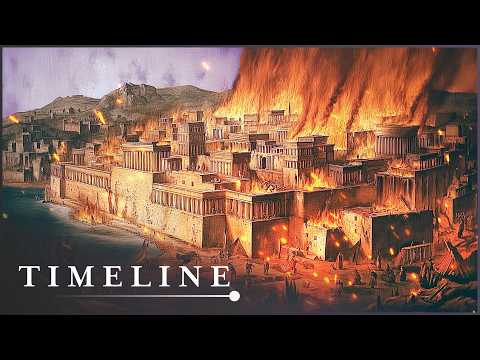
The collapse of multiple ancient civilizations around 1200 BCE was driven by a combination of climate change, drought, and societal interconnectivity, leading to widespread famine, invasions, and the eventual reset of human civilization in the West.
12,000 years ago, nature released the Earth from the grip of an Ice Age. Since then, humanity has tamed the wilderness, pioneered technologies, and built cities, nations, and empires. However, around 3,200 years ago, humanity faced one of its biggest setbacks in history, akin to hitting the reset button on civilization. This period saw the collapse of thriving cultures across the Mediterranean, leading to the extinction of writing systems and languages. Recent scientific data has shed light on how climate change played a crucial role in this collapse, revealing patterns that resonate with our current environmental challenges.
The Late Bronze Age was a time of flourishing kingdoms and empires, including Egypt, the Hittites, and the Mycenaeans. This period is significant for events such as the Exodus and the Trojan War. However, the end of this era came swiftly, with many civilizations collapsing within a generation or two. Archaeologists and historians have long sought to understand the causes of this simultaneous collapse.
Eric Klein, a leading authority on the Late Bronze Age, began piecing together evidence from various fields, including archaeology, history, and climate science. He discovered that many ancient civilizations were interconnected through trade and diplomacy, which made them vulnerable to widespread disruptions. The evidence suggests that the kingdoms of the Late Bronze Age were not only trading goods but also sharing cultural and political ties.
Recent studies indicate that climate change was a significant factor in the collapse of these civilizations. The region that is now the Sahara was once a lush environment, but as it dried out, populations migrated towards the Nile Valley, leading to the emergence of dense settlements and civilizations. By 3000 BCE, these settlements had united into a powerful kingdom capable of monumental achievements, such as the construction of the pyramids.
Around 1200 BCE, Egypt faced a series of invasions from marauders known as the Sea Peoples. These invaders devastated cities and kingdoms, leading to widespread destruction. While early archaeologists attributed the collapse to these marauders, recent research suggests that they were part of a larger crisis driven by climate change, famine, and societal instability.
Scientific evidence from pollen analysis and sediment studies indicates that a significant drought occurred during the Late Bronze Age. This drought coincided with the destruction of cities across the region, suggesting that climate change was a critical factor in the collapse. The interconnectedness of these civilizations meant that when one kingdom faced drought and famine, it could trigger a domino effect, leading to widespread societal collapse.
Eric Klein theorizes that the collapse was not due to a single event but rather a perfect storm of catastrophes. The combination of drought, famine, and invasions created an environment where societies could not recover. The evidence points to a climate crisis that affected the entire Mediterranean region, leading to the breakdown of trade networks and political alliances.
The collapse of these civilizations marked the beginning of a new Dark Age in the West. Writing systems and languages disappeared, and the cultural patterns of the Bronze Age were lost. However, Egypt managed to endure, albeit weakened, while other kingdoms vanished from history.
The story of the Bronze Age collapse serves as a cautionary tale for modern society. As we face our own climate challenges, understanding the past can help us navigate the future. The interconnectedness of ancient civilizations highlights the importance of cooperation and resilience in the face of environmental changes.
The simultaneous collapse of ancient civilizations around 1200 BCE was a complex event driven by climate change, societal interconnectivity, and a series of catastrophic failures. As scientists continue to uncover new evidence, it becomes increasingly clear that the lessons from our past are more relevant than ever in addressing the challenges we face today. The collapse of the Bronze Age civilizations reminds us of the delicate balance between humanity and nature, and the consequences of ignoring that balance.



















