
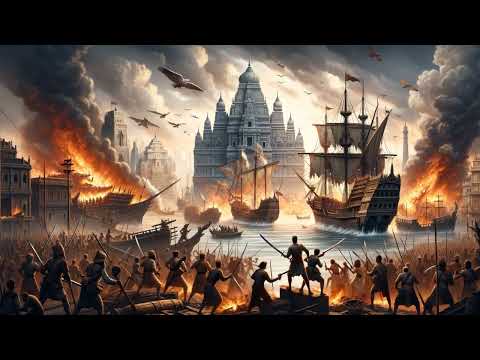
This blog post explores the Spanish invasions and colonial rule in South and Central America, detailing the conquests of the Aztec and Incan empires, the establishment of colonial governance, the impact of the Spanish Inquisition, and the lasting cultural and social legacies of Spanish rule.
Welcome to Spectrum Sphere, your portal to a diverse world of discovery where we explore everything from science to history with a fresh perspective. If you're intrigued by the tales of empires and the echoes of past conquests, you're in the right place. In this post, we will dive into the riveting history of Spanish invasions and rule in South and Central America.
In the 15th century, Europe experienced a surge in maritime exploration driven by the quest for new trade routes and wealth. Spain, a fervent participant in this era, was powered by ambition and the Catholic Monarchs' desire to expand their influence. This marked the beginning of Spain's monumental voyages across uncharted seas, altering history forever.
Christopher Columbus's voyages, financed by the Spanish Crown, were pivotal. Setting sail in 1492, Columbus aimed to find a westward route to Asia but instead stumbled upon the Americas. This new world would reshape global geopolitics and mark the beginning of a new era in human history.
In 1494, Spain and Portugal signed the Treaty of Tordesillas, brokered by the Pope, which drew an imaginary line west of the Cape Verde Islands. This line granted Spain the right to colonize all lands to the west while Portugal was entitled to the east, facilitating Spain's expansive conquests in the Americas.
Following the trend of Spanish conquests, Hernan Cortez arrived on the shores of what is now Mexico in 1519. With a blend of military prowess, strategic alliances with discontented tribes, and brutality, Cortez toppled the mighty Aztec Empire. The fall of Tenochtitlan in 1521 marked a turning point in history, leading to the destruction of a great city and the eventual downfall of the Aztec Empire.
Following Cortez's blueprint, Francisco Pizarro led an audacious expedition that culminated in the conquest of the Incan Empire in 1532. With strategic cunning and treachery, Pizarro captured the Inca Emperor Atahualpa at the Battle of Cajamarca, effectively dismantling another mighty civilization.
In the wake of conquering the indigenous empires, the Spanish Crown established the Viceroyalty of New Spain in 1535. This vast administrative region consolidated Spain's newly acquired territories and structured governance and taxation, serving as the epicenter of Spanish colonial authority in the Americas.
As the Spanish solidified their grip on the Americas, missionaries became pivotal in their expansion strategy. These fervent emissaries of faith journeyed across the new colonies, zealously spreading Christianity. Their efforts led to the widespread conversion of indigenous populations, fundamentally altering the religious landscape of South and Central America.
Transitioning from the topic of conversion, let's delve into Spanish economic policies. The encomienda system was instigated, a form of labor control where conquistadors were granted rights to indigenous labor and tribute. In return, they were expected to provide protection and Christian instruction. However, this system often led to severe exploitation and abuse.
With the encomienda system's harsh demands, the Spaniards turned to another egregious practice: the import of African slaves. This began the Atlantic slave trade in the Americas, a tragic period marked by the forced migration and brutal subjugation of millions of Africans who were integral to the colonial economy.
The insatiable hunger for wealth drove the Spanish to exploit vast quantities of natural resources. Mines in places like Potosi began producing incredible amounts of silver and gold, fueling European economies. However, this extraction came at a dire cost to the native populations, who toiled under brutal conditions.
Tragically, the arrival of the Spaniards introduced deadly European diseases to which indigenous people had no immunity. Smallpox, influenza, and measles swept through native populations with devastating speed, decimating entire communities and contributing to the collapse of societies such as the Aztecs and Incas.
As Spanish influence expanded, the Empire sought more structured governance, leading to the formation of the Viceroyalty of Peru in 1542. This administrative division governed much of South America and was instrumental in enforcing Spanish power, managing resources, and overseeing the subjugation and conversion of the indigenous population.
The colonization brought about a profound blending of Spanish and native cultures, a process known as mestizaje. This cultural convergence can be seen in the arts, cuisine, language, and religion, creating a unique tapestry reflected in the diverse traditions and practices seen across Latin America today.
As Spain's grip on the New World tightened, a colonial economy emerged centered on the hacienda system. Large estates dominated agriculture, utilizing the coerced labor of indigenous peoples to cultivate vast tracts of land. This system entrenched social hierarchies and fueled the wealth of the Spanish Crown.
The imposed burdens led to uprisings from oppressed indigenous populations. A notable rebellion was led by Tupac Amaru II, a descendant of Incan royalty, who in 1780 rallied thousands in an uprising against Spanish authorities, protesting the brutalities of colonial rule and advocating for indigenous rights and justice.
To structure their colonial holdings, Spain instituted a comprehensive legal framework known as the Laws of the Indies. This extensive body of regulations governed territorial administration, commerce, the treatment of indigenous peoples, and even urban planning, reflecting Spanish intent to create an orderly and prosperous society overseas.
Spanish colonialism left an indelible mark on South and Central American languages. As settlers mingled with indigenous populations, a linguistic transformation unfolded. Many native languages incorporated Spanish words, while several regional dialects of Spanish evolved, creating a rich tapestry of language influenced by indigenous tongues and colonial presence alike.
Spanish colonialism also cemented its legacy through architecture. Imposing cathedrals, grand plazas, and fortresses rose, reflecting Spain's architectural styles. The grid pattern of cities spoke of a new order, and these urban centers became focal points of Spanish culture and power in the New World.
As Spanish settlers intertwined with indigenous and African populations, a complex caste system emerged, codifying racial stratification. This societal hierarchy ranked individuals and dictated rights and occupations based on racial heritage, creating deep divisions with peninsulares and criollos at the top, while mestizos and mulatos faced systemic limitations.
The cultural imprint of Spanish rule is vividly alive in the rhythms, movements, and colors of Latin America. Flamenco, with its passionate steps and classical guitar melodies, seeped into local traditions, creating a rich tapestry of music and dance that continues to resonate today.
To safeguard their precious colonies, the Spanish constructed an intricate network of fortifications as European rivals cast envious eyes on these lucrative territories. Fortified cities rose from Havana to Cartagena, while the Caribbean became a chessboard for pirates, both feared and at times tacitly employed to disrupt Spain's adversaries.
As the winds of the Enlightenment swept across Europe, they reached the Spanish colonies, bringing forth the Bourbon Reforms. These efforts aimed to modernize and invigorate the Empire, streamline administration, and increase revenue, implemented by the Spanish Crown to reduce corruption and curb the power of the criollo elite.
Amid these changes, a distinct criollo identity emerged, driven by discontent with the Spanish Crown's relegation of criollos to second-class status. Stirred by Enlightenment ideals and frustrated by the lack of political power, this discontent led to the sprouting of early independence movements across South and Central America.
One prominent figure in these movements was Simón Bolívar, known as El Libertador. Bolívar became the face of South American independence, leading a series of military campaigns that ultimately overthrew Spanish rule across vast territories, giving birth to several new nations inspired by his vision of a united Latin America.
In the north, the Mexican War of Independence ignited a brutal conflict that spanned over a decade. This struggle culminated in 1821, leading to the dissolution of the Viceroyalty of New Spain and the birth of Mexico as a sovereign nation, reshaping the political landscape of the Americas forever.
Following independence, Spanish America grappled with economic turmoil. Centuries of colonial rule had stifled local industries and created an overreliance on resource extraction. Now, new nations faced the daunting task of building economies from the ground up while navigating international trade on their own terms.
Spanish colonialism left an indelible mark on Latin America, weaving a complex tapestry of cultural identity today. From language and religion to cuisine and art, traces of Spain remain interlaced with indigenous and African heritages. This fusion shapes a unique cultural mosaic that is central to the Latin American spirit.
The Spanish colonial era forged legal and social frameworks that persist to this day. From civil codes to the organization of municipalities, the structural foundations laid by Spain influence the governance and societal norms across Latin America, reflecting in the modern region's legal systems and community interactions.
As we reflect on the Spanish reign, we observe profound complexities. It reshaped continents, societies, and cultures, leaving indelible marks on identities and institutions. This complex legacy of influence continues to provoke debate over the implications of Spanish rule in shaping the rich tapestry of South and Central American life.
Thank you for joining us at Spectrum Sphere on this historical journey. We hope you found the story of the Spanish invasions and their lasting impact enlightening. If you've enjoyed this exploration, please show your support by clicking the like button and subscribing for more diverse discoveries. Until next time!



















