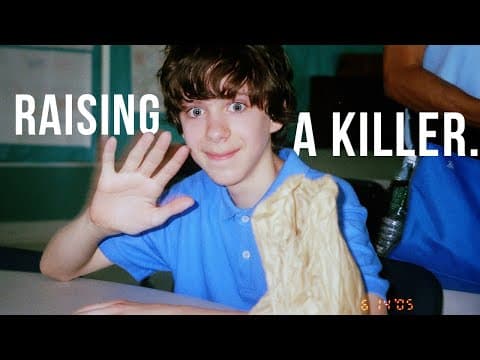
This blog post explores the childhood of Adam Lanza, the Sandy Hook shooter, examining the complex relationship with his mother, Nancy Lanza, and the factors that contributed to his violent actions. It delves into his early developmental issues, the impact of isolation, and the missed opportunities for intervention that may have prevented the tragedy.
On December 14, 2012, Adam Lanza committed one of the most horrific mass shootings in American history at Sandy Hook Elementary School, resulting in the deaths of 26 people, including 20 young children. This blog post seeks to explore the childhood of Adam Lanza, focusing on his relationship with his mother, Nancy Lanza, and the various factors that may have contributed to his violent actions.
Adam Lanza was born in 1992 in New Hampshire to Peter and Nancy Lanza. The Lanza household was initially described as loving, with Nancy prioritizing her two sons, Adam and Ryan. However, Nancy was also a perfectionist, which may have influenced her parenting style.
From a young age, Adam exhibited developmental issues. By the age of three, he was diagnosed with communication difficulties and anxiety. He struggled to connect with his peers and family, often showing signs of frustration, such as head-banging. Despite these early signs, Nancy's approach to Adam's challenges was to interpret them as temporary issues that he would outgrow.
As Adam grew older, his behavioral problems became more pronounced. By age five, he was diagnosed with obsessive-compulsive disorder (OCD) and was placed in special education classes, which led to social stigmatization. Although he enjoyed activities like Cub Scouts, where he was first introduced to firearms, his social withdrawal continued to deepen.
Nancy Lanza's influence on Adam's life was significant. She attempted to be his advocate, often interpreting his needs to teachers and professionals. However, her perfectionism and denial about Adam's mental health issues may have hindered his development.
In the years leading up to the tragedy, Nancy began to tell friends that she had a terminal illness, a claim that was later found to be fabricated. This behavior may have been a cry for help or a way to gain sympathy, but it also indicated her own emotional struggles.
As Peter Lanza's job required long hours, Nancy became increasingly isolated, taking on the role of a single parent. This isolation intensified her relationship with Adam, who became more dependent on her. Nancy's desire to control every aspect of Adam's life led to a lack of professional intervention, despite clear signs that he needed help.
Throughout Adam's childhood, there were numerous opportunities for intervention that were overlooked. For instance, when Adam was ten, he wrote a disturbing story about a grandmother and her son going on a killing spree. This should have raised alarm bells, but it was dismissed as creative expression.
In 2005, Nancy took Adam to the emergency room due to increased anxiety. Medical professionals recommended further psychiatric evaluation and treatment, but Nancy only sought a sick note for school. This refusal to accept help marked a turning point in Adam's life, as it led to the cessation of all significant therapy and medication.
By the time Adam was 14, Nancy had withdrawn him from school, opting for homeschooling. This decision further isolated Adam from his peers and the outside world, creating a bubble that cut him off from necessary social interactions and support systems.
In the days leading up to the Sandy Hook shooting, Adam's mental state deteriorated further. He became increasingly obsessed with violence and mass shootings, spending hours researching and editing entries about spree killers online. His isolation deepened, and he communicated with his mother only through email.
On December 14, 2012, Adam shot his mother in her bed before heading to Sandy Hook Elementary School, where he committed the massacre. His actions were premeditated, and he was heavily armed, indicating a chilling level of planning and intent.
The Sandy Hook tragedy is a stark reminder of the complexities surrounding mental health, parenting, and societal responsibility. While Adam Lanza's actions were ultimately his own, the role of his mother, Nancy Lanza, cannot be overlooked. Her denial, isolation, and failure to seek appropriate help for Adam contributed significantly to the environment that allowed such a tragedy to occur. The question remains: could this horrific event have been prevented with earlier intervention and support?