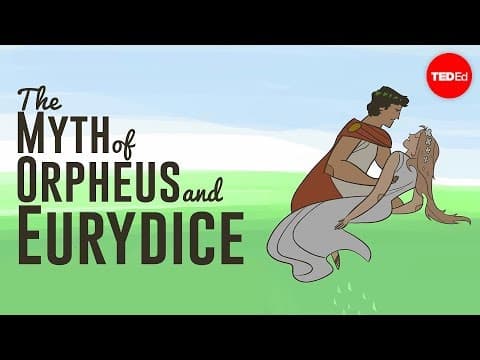
The myth of Orpheus and Eurydice tells the poignant story of love, loss, and the consequences of temptation. After losing his beloved Eurydice to a snake bite, Orpheus ventures into the underworld to bring her back, only to face the tragic condition of not looking back at her until they reach the surface. His inability to resist this temptation leads to their eternal separation, but his sorrow gives birth to the art of love poetry, immortalizing their story.
The myth of Orpheus and Eurydice is one of the most poignant tales from ancient mythology, encapsulating themes of love, loss, and the consequences of human desire. This story begins with a perfect wedding, where Orpheus, the greatest of all poets and musicians, marries Eurydice, a beautiful wood nymph. Their love is evident to all, but tragedy strikes when Eurydice is bitten by a snake and dies, leaving Orpheus heartbroken.
Overwhelmed by grief that the human world could not contain, Orpheus resolves to journey to the underworld, a realm from which no living creature had ever returned. His determination to rescue Eurydice from death showcases the depth of his love. Upon reaching the gates of the underworld, Orpheus begins to play his lyre, producing music so enchanting that it calms Cerberus, the three-headed dog guarding the dead, allowing him passage.
As Orpheus enters the palace of Hades and Persephone, he sings of his love for Eurydice, lamenting her untimely death. His heartfelt performance captivates the rulers of the underworld, and they grant his request to bring Eurydice back to the living world, but with one crucial condition: he must not look back at her until they have both reached the surface. This condition sets the stage for the tragic turn of events that follow.
As Orpheus begins his ascent from the underworld, doubt creeps into his mind. He worries about whether Eurydice is truly following him. The silence around him amplifies his anxiety, and just as he is about to step into the light of day, he succumbs to temptation and looks back. In that moment, Eurydice is pulled back into the underworld, lost to him forever. Orpheus's heartache is profound, and he vows never to love another woman again.
In his sorrow, Orpheus retreats to a grove of trees, where he sings songs of love and loss. He reflects on the stories of other lovers, such as Ganymede, Myrrah, and Pygmalion, each tale echoing his own pain. His ability to articulate the depths of love and loss gives rise to a new art form: the love poem. Through his music, Orpheus connects with the universal experiences of lovers everywhere, transforming his personal tragedy into a source of artistic inspiration.
However, Orpheus's beauty and sorrow attract the attention of the Maenads, a group of wild women who cannot bear the thought of a poet who sings so beautifully of love without loving them in return. Their jealousy leads to a frenzied attack, resulting in Orpheus's tragic demise. The natural world mourns his loss; birds sing sorrowful tunes, and rivers weep as they flow.
In death, Orpheus finds peace, reuniting with Eurydice in the underworld. Together, they walk along the banks of the River Styx, sometimes side by side, sometimes with Eurydice in front, and at times Orpheus takes the lead, looking back at her as often as he wishes. Their love, though marked by tragedy, transcends the boundaries of life and death, immortalizing their story in the hearts of those who hear it.
The myth of Orpheus and Eurydice serves as a powerful reminder of the complexities of love and the human condition. It illustrates how love can inspire profound art while also leading to devastating consequences. Through Orpheus's journey, we learn that love, in all its forms, is a force that can shape our lives and our legacies, echoing through time as a testament to the enduring power of connection and the pain of loss.