
This blog post explores the significant changes in the lives of German people between 1933 and 1939 under Nazi rule, focusing on the impact of Nazi policies on workers, women, youth, and the persecution of Jews, highlighting the regime's ideological goals and societal transformations.
This blog post delves into the profound changes experienced by the German populace from 1933 to 1939 under Nazi rule. It examines the impact of Nazi policies on various segments of society, including workers, women, youth, and the escalating persecution of Jews. The Nazi regime's ideological goals and the societal transformations that occurred during this period are central to understanding this dark chapter in history.
When the Nazis came to power, Germany faced rampant unemployment, with around six million people jobless in 1932. The regime promised "work and bread," successfully reducing unemployment through various initiatives. By 1939, a labor shortage emerged due to the Nazis' aggressive job creation strategies, including:
While large businesses thrived, small businesses suffered. The Nazis abolished trade unions in May 1933, replacing them with the German Labor Front (DAF), which favored big businesses, leading to lower wages and longer hours for workers. The DAF also implemented programs like Strength Through Joy, which aimed to improve workers' leisure time but served primarily as propaganda.
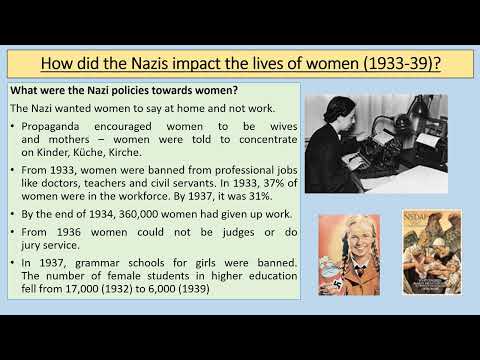
The Nazis held a traditional view of women's roles, encapsulated in the slogan "Kinder, Küche, Kirche" (Children, Kitchen, Church). Their policies aimed to:
From 1933, women were banned from many professional careers, and marriage loans were introduced to encourage women to stay at home. Despite initial declines in female employment, by 1939, the number of women in the workforce had increased due to economic improvements and labor shortages. However, women were still discouraged from pursuing higher education, with significant drops in female university enrollment.
The Nazi regime transformed education to indoctrinate young people. Jewish teachers were dismissed, and the curriculum was rewritten to align with Nazi ideology. Subjects like race studies and eugenics were introduced, emphasizing Aryan superiority.
The Hitler Youth, established in 1926, became a compulsory organization by 1939, aiming to indoctrinate boys and girls into Nazi ideals. Activities included physical training and political indoctrination, preparing youth for their roles in Nazi society. While many young people initially enjoyed the camaraderie and activities, the organization became increasingly militarized and strict over time.
From the moment the Nazis came to power, anti-Semitic policies intensified. The Nuremberg Laws of 1935 stripped Jews of citizenship and imposed severe restrictions on their rights. Jews were banned from various professions, public spaces, and even from owning businesses.
The situation for Jews worsened dramatically, culminating in the Kristallnacht (Night of Broken Glass) in November 1938, where widespread violence against Jewish people and property occurred. This event marked a significant turning point, leading to increased violence and persecution, with many Jews fleeing Germany in the aftermath.
The years 1933 to 1939 were marked by significant transformations in the lives of German people under Nazi rule. While the regime promised economic stability and national pride, it simultaneously enforced oppressive policies that targeted various groups, particularly Jews. Understanding this period is crucial for recognizing the consequences of totalitarian ideologies and the importance of safeguarding human rights in society.



















