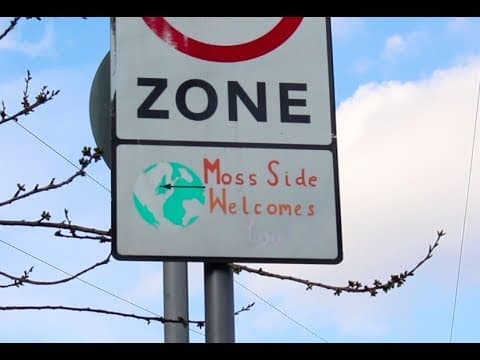
Moss Side, once a vibrant community, faced significant challenges due to urban redevelopment in the 1960s and 70s. This blog post explores the history of Moss Side, the impact of community displacement, and the ongoing struggle for identity and belonging amidst regeneration efforts.
Moss Side, a neighborhood in Manchester, has undergone significant changes over the decades. Once celebrated for its close-knit community and vibrant culture, it faced challenges due to urban redevelopment and social upheaval. This blog post delves into the history of Moss Side, the impact of regeneration, and the community's resilience in the face of adversity.
In the past, Moss Side was described as a wonderful place to live, where neighbors knew each other and shared a sense of belonging. Residents often referred to it as a big family, where children played freely in the sun, and laughter filled the streets. The community was characterized by its diversity, with families from various backgrounds coexisting and forming friendships.
The 1960s marked a turning point for Moss Side, as it began to welcome a significant influx of African Caribbean and Sikh communities. This demographic shift brought vibrancy and cultural richness to the area, although it was not without its challenges. Many long-time residents recalled the animosity faced by mixed-race couples and the lingering effects of racism that had once permeated the community.
Despite its vibrant community, Moss Side faced decline as the working-class population moved to outer suburbs, leaving behind deteriorating housing. The local council initiated a massive clearance and redevelopment scheme in the late 1950s, which aimed to address the slum conditions but ultimately led to the dispersal of the community. Residents were often relocated to overspill estates far from their familiar surroundings, disrupting social ties and community cohesion.
The urban planning decisions made during this period were often brutal and lacked consideration for the residents' needs. Many families were uprooted from their homes, receiving inadequate compensation for their properties. The council's approach to redevelopment was criticized for its lack of consultation with the community, leading to feelings of alienation and resentment among residents.
In response to the impending redevelopment, community activists began organizing to demand a say in the future of Moss Side. The Moss Side People's Association was established, aiming to empower residents and advocate for their needs. However, frustrations grew as the council continued to ignore community input, leading to the formation of the Housing Action Group in 1969.
The Housing Action Group sought to challenge the council's autocratic approach to redevelopment. They called for meaningful consultation with residents, emphasizing the importance of preserving community ties and ensuring that redevelopment efforts respected the needs of those affected. This grassroots movement aimed to shift the narrative from slum clearance to community-driven development.
Despite the community's efforts, the redevelopment of Moss Side proceeded with little regard for the residents' voices. New housing developments were often criticized for their lack of character and connection to the community's history. Many residents felt that they had been ghettoized, forced into living conditions that did not reflect their needs or aspirations.
The struggles faced by Moss Side during this period highlight the importance of community engagement in urban planning. The experiences of residents led to a broader recognition of the need for consultation in redevelopment efforts, shaping policies that prioritize community input in future projects.
Moss Side's journey through regeneration and rebirth is a testament to the resilience of its community. While the challenges of displacement and urban planning have left lasting scars, the spirit of togetherness and the fight for a voice continue to define the neighborhood. As Moss Side moves forward, it carries with it the lessons learned from its past, striving to create a future that honors its rich history and diverse community.