
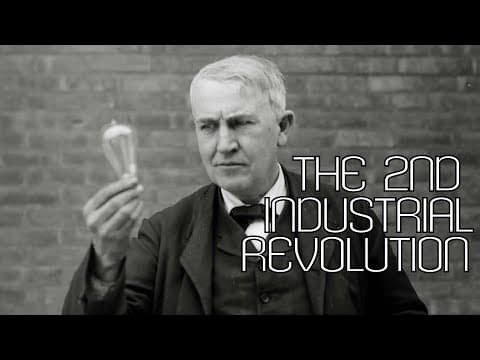
The Second Industrial Revolution, spanning from 1870 to 1914, marked a significant shift in industrial practices, focusing on steel, electricity, and mass production, which transformed cities, communication, and consumer goods, while also laying the groundwork for a global marketplace.
The Second Industrial Revolution, occurring roughly between 1870 and 1914, represents a pivotal shift in industrial practices and innovations. This period saw a transition from the earlier focus on textiles and steam power to new materials and technologies that would redefine industries and societies.
The First Industrial Revolution primarily revolved around textile production, iron, coal, and the development of railroads. However, as the 20th century approached, the focus began to shift towards new products and inventions. The Second Industrial Revolution introduced significant advancements in steel production, electricity, and mass manufacturing.
One of the most notable developments during this period was the advancement in steel production, largely attributed to Henry Bessemer. In 1855, Bessemer developed a new process for producing steel that drastically reduced costs and improved quality. The cost of refining steel plummeted from $80 a ton to just $9 a ton, making steel more accessible and affordable.
Steel quickly replaced iron as the primary building material, enabling the construction of larger, stronger structures. Cities like Cleveland and Pittsburgh emerged as steel manufacturing hubs, reflecting the material's dominance in construction and infrastructure. By 1914, steel production in Europe had skyrocketed from 125,000 tons in 1860 to 32 million tons, showcasing the material's critical role in the industrial landscape.
As the Second Industrial Revolution progressed, steam power began to be replaced by electricity. The first electric generators were developed in the 1870s, allowing for the wiring of homes and businesses. By 1910, the establishment of hydroelectric power stations marked a significant milestone in energy production.
The invention of the incandescent light bulb, credited to Thomas Edison and Joseph Swan, transformed daily life. Factories could now operate around the clock, leading to increased production and a demand for more workers. The introduction of electric streetlights also enhanced urban life, allowing for nightlife and safer streets.
The period also witnessed groundbreaking advancements in communication. Alexander Graham Bell's invention of the telephone in 1876 revolutionized long-distance communication, allowing for instantaneous contact between individuals and businesses. This innovation replaced slower methods like telegrams and telegraphs, significantly enhancing business operations.
Wireless telegraphy further advanced communication capabilities, enabling news and information to be shared without the need for physical wires. These developments not only improved personal communication but also created new industries and job opportunities.
Transportation underwent significant changes during the Second Industrial Revolution. The introduction of streetcars and subways facilitated urban expansion, allowing cities to grow outward and making it easier for people to navigate urban environments. By the early 1900s, the automobile began to emerge as a popular mode of transportation, further transforming how people traveled and lived.
The Second Industrial Revolution also marked the rise of mass production. Innovations in machinery and the adoption of assembly line techniques allowed for faster and cheaper production of goods. This efficiency led to the proliferation of consumer products, from washing machines to electric irons, fundamentally changing household dynamics.
As industrialized nations developed, a global marketplace began to take shape. Steamliners and larger boats enabled the transportation of goods across oceans, facilitating international trade. Industrialized countries invested in non-industrialized nations to access resources and markets, setting the stage for future economic dynamics.
The Second Industrial Revolution was a period of remarkable transformation that reshaped industries, cities, and daily life. Key takeaways include:
As we reflect on this transformative era, it is essential to recognize both the advancements and the challenges that accompanied such rapid industrial growth.



















