
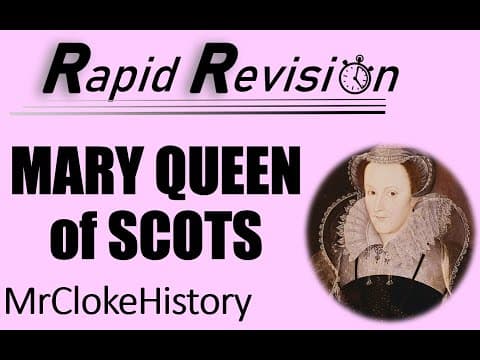
Mary Queen of Scots posed a significant threat to Elizabeth I's reign due to her legitimate claim to the English throne and her Catholic support. This blog explores the complex relationship between the two queens, the political intrigues, and the events leading to Mary's eventual execution.
Mary Queen of Scots remains one of the most fascinating figures in British history, particularly in her relationship with Elizabeth I of England. This blog post delves into the challenges Mary posed to Elizabeth's reign, her legitimate claim to the English throne, and the political machinations that ultimately led to her downfall.
Mary's claim to the English throne was rooted in her lineage. As the granddaughter of Henry VII, she was a legitimate heir, and many Catholics in England supported her claim. The family tree reveals the connections: Elizabeth was the daughter of Henry VIII, while Mary was the daughter of James V of Scotland, making them cousins. This familial link was significant, especially after the death of Mary I, when many Catholics viewed Mary as the rightful queen.
Mary was born on December 8, 1542, and became Queen of Scotland just six days later upon her father's death. Her mother, Mary of Guise, was from a powerful French family, which facilitated Mary's marriage to Francis, the future King of France. This marriage briefly made her Queen of France, further solidifying her royal status.
The religious Reformation of the 16th century affected both England and Scotland. In 1560, Protestant Lords in Scotland rebelled against Mary of Guise's Catholic influence. Elizabeth, concerned about the potential for a Catholic alliance between France and Scotland, supported the Protestant Lords with money and troops. The resulting Treaty of Edinburgh allowed Mary to remain Queen of Scotland but required her to renounce her claim to the English throne. However, Mary never accepted these terms, continuing to pose a threat to Elizabeth.
Mary's troubles escalated after her marriage to Henry Stewart, Lord Darnley, in 1565. Their marriage was tumultuous, and in 1567, Darnley was murdered under suspicious circumstances. Mary’s subsequent marriage to the prime suspect, the Earl of Bothwell, led to public outrage and rebellion among the Protestant Lords, forcing her to abdicate in favor of her infant son, James.
Mary's escape from captivity and her attempt to reclaim her throne ended in defeat at the Battle of Langside. In 1568, she fled to England, seeking Elizabeth's protection, but her presence created a precarious situation for Elizabeth.
Elizabeth faced a difficult choice regarding Mary. While she recognized Mary as a legitimate monarch and a potential threat, she was hesitant to take decisive action. Mary was held under house arrest, and Elizabeth refused to meet with her or acknowledge her claims. A trial was held, but without a verdict, Mary remained a prisoner, and her situation became increasingly complicated.
In 1569, a plot emerged involving Mary marrying the Duke of Norfolk, which would have positioned their offspring as heirs to the throne. This conspiracy, along with others like the Revolt of the Northern Earls and the Babington Plot, further threatened Elizabeth's reign. Despite these plots, Elizabeth continued to hesitate in her response to Mary’s situation.
Ultimately, the accumulation of plots and the persistent threat Mary posed led to her execution in 1587. Elizabeth's indecision and the political climate of the time forced her hand, resulting in the death of a queen who had once been her cousin and ally.
Mary Queen of Scots' claim to the English throne and her Catholic support made her a constant threat to Elizabeth I. The complex interplay of familial ties, political intrigue, and religious conflict defined their relationship. Elizabeth's reluctance to decisively deal with Mary ultimately culminated in tragedy, highlighting the precarious nature of power and legitimacy in the turbulent political landscape of the 16th century.
As we reflect on this historical narrative, it raises questions about leadership, loyalty, and the consequences of political decisions that resonate even today.



















