Las Vegas, once the vibrant playground of the middle class, now feels like a ghost town due to corporate greed, exorbitant prices, removal of free attractions, and a strategy to exclude middle-class visitors. This has led to empty sidewalks, a decline in street life, and a sense of danger, signaling the death of the classic Vegas experience.
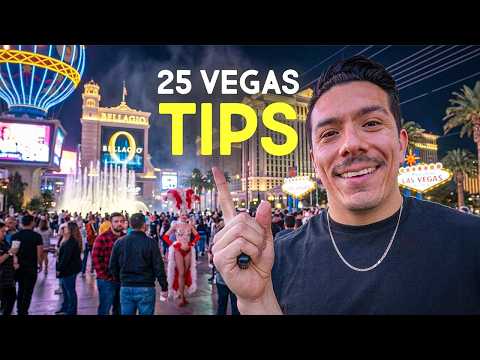
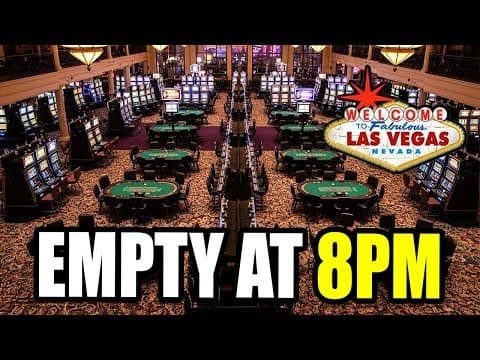
It is 8:00 on a Friday night. You stand dead center on the Las Vegas Strip, between the Bellagio and Caesar's Palace. This moment is supposed to be the loudest, wildest hour on Earth. You should be fighting through shoulder-to-shoulder crowds, feeling the ground shake beneath you from the booming bass. But tonight, there is no party. Instead, there is silence — a silence that should never exist in Sin City.
Look around. Where are the bachelor parties? The tourists? Instead of crowds, there are vast stretches of empty concrete. A gift shop clerk stares blankly at a wall. A menu reveals the reason for the silence: $26 for a bottle of water. This is not just a slow night; it feels like a crime scene.
For decades, Las Vegas had an unspoken deal with its visitors: lose a little money, but be treated like royalty. Cheap shrimp, free drinks, and the illusion of owning the world. But the corporations running the city got greedy. They broke that deal, stripping away the magic and replacing it with spreadsheets. The result? The people have voted with their feet. The house is losing for the first time.
The main culprit behind the empty sidewalks is the "price wall." Visitors arrive excited for their dream vacation, only to realize that stepping outside their hotel rooms will bleed them dry. A simple order of two cocktails and a water can cost nearly $100.
Where once cheap food and drinks were loss leaders to get people moving and energized, now every interaction is a chance to gouge customers. Low room rates are bait, followed by hidden fees: resort fees, parking fees, venue fees. This financial trap forces families to retreat to their rooms, hoarding supplies from nearby drugstores rather than enjoying the Strip.
The vibrant energy of the Strip was once fueled by free, massive public spectacles — the siren show at Treasure Island, the Bellagio fountains, the Rio's masquerade in the sky. These attractions acted as magnets, pulling crowds and creating a river of humanity.
Corporate accountants saw only costs and cut these shows. They drained canals, shut down volcanoes, and replaced magic with drugstores and Sephoras. Without these street anchors, tourists have no reason to walk the Strip, opting instead for Uber rides from door to door. The sidewalks are silent because the very things that made them sing have been removed.
The emptiness is not accidental; it is by design. Casino executives viewed the diverse crowds of college kids, retirees, and families as clutter. They wanted a curated collection of wealthy wallets, not a bustling crowd.
They raised table minimums, removed benches, eliminated cheap parking, and closed affordable food courts. The middle class was effectively evicted. But the miscalculation was that the ultra-rich "whales" did not multiply enough to fill the void. The result is a private club with no members — empty VIP lounges overlooking empty streets.
Inside the casinos, the communal buffets that once served as the city's stomach have been replaced by sterile, luxury food halls. The old buffets were loud, chaotic, and social — a place where millionaires and mechanics ate side by side.
Now, dining is a solitary transaction. Guests order from touchscreens, eat quickly, often standing or rushing back to their rooms. This grab-and-go culture lowers the social temperature, turning the most social city on Earth into a collection of lonely individuals.
The emptiness has a darker consequence: a safety vacuum. Urban planning teaches that "eyes on the street" make streets safe. Crowds deter criminals. But when families and middle-class tourists are priced out and the sidewalks clear, predators become emboldened.
The street performers are no longer friendly characters but aggressive hustlers. The vibe is menacing, not peaceful. Tourists instinctively avoid walking, opting for Ubers even for short distances. The sanitized luxury casino has become a desolate alleyway where visitors constantly check over their shoulders.
The silence on the Strip at 8:00 p.m. is the sound of the death of an American icon. For 70 years, Las Vegas was a classless paradise where anyone could enjoy the same cheap beer, free shows, and craps tables. This democratic debauchery was the secret sauce.
The new corporate ownership has forgotten the basic rule of casino business: you have to let the player win sometimes — not just money, but the experience. They saw inefficiencies and lost revenue in cheap buffets, free lounges, and pirate shows, so they sterilized the chaos and monetized every interaction.
The result is a beautiful, gleaming, high-tech machine with no soul. It is optimized for maximum extraction per square foot but is dead inside. The neon lights are bright, but the human electricity is gone. Unless the corporations realize that a city without a soul is just concrete in the desert, the silence will only grow louder.
Las Vegas is no longer the vibrant playground it once was. Corporate greed, exorbitant prices, removal of free attractions, and a strategy to exclude the middle class have turned the Strip into a ghost town. The energy, the buzz, and the magic that made Vegas unique have been replaced by silence, isolation, and a creeping sense of danger.
Have you noticed this shift? Do you remember the moment you realized the old Vegas was gone? The story of Las Vegas is a cautionary tale about what happens when a city prioritizes profit over people and experience. The future of the Strip depends on whether it can reclaim its soul and once again become a place where anyone can feel like royalty, not just a walking wallet.
What do you think? Share your experiences and thoughts about the changing face of Las Vegas. The only way to force change is by speaking the truth.