North Korea briefly reopened to Western tourists in February 2025 after a five-year closure due to the pandemic, but quickly closed its borders again. The country has invested heavily in tourism infrastructure but remains isolated, allowing only Russian tourists due to geopolitical ties. The future of tourism in North Korea is uncertain, influenced by the regime's fear of foreign influence and the lucrative relationship with Russia amid the ongoing war in Ukraine.
For a very brief five-day window between February 20 and 24, 2025, North Korea, known as one of the world's most reclusive countries, opened its doors to Western tourists for the first time in over five years. This unprecedented event allowed just 13 Westerners to visit the country on a strictly controlled tour of Rasone, a city in the far northeast corner of North Korea, near the borders with Russia and China. However, this brief opening was quickly followed by a return to isolationism, raising questions about the future of tourism in North Korea.
North Korea has historically leaned towards heavy isolationism, a trend that intensified with the onset of the COVID-19 pandemic in early 2020. The country was the first in the world to seal its borders on January 21, 2020, and did not allow any Western tourists to enter for over five years. The recent tour in February 2025 was a significant moment, but it was short-lived, as the North Korean government announced another indefinite end to Western tourism just weeks later.
The tourists who were allowed to visit in February 2025 came from various countries, including the UK, Canada, Australia, and several European nations. Notably, no Americans were part of this group. They crossed into North Korea from China, and many have since shared their experiences on platforms like YouTube, garnering millions of views. However, the North Korean government quickly reverted to its strict isolationist policies, leaving many to wonder when, or if, Western tourists would be welcomed back again.
As of now, the only foreign nationality permitted to enter North Korea are Russians, due to the strengthening geopolitical relationship between Russia and North Korea. In February 2024, North Korea began allowing Russian citizens to visit as tourists, marking the first foreign tourists allowed since early 2020. However, the number of Russian visitors has been disappointingly low, with fewer than 900 Russians visiting throughout 2024.
Despite the ongoing isolation, North Korea has invested billions of dollars into revamping its tourism sector, hoping to attract tourists once it reopens. This includes the construction of a large-scale ski resort at Samjiyon and a massive beach resort at Wonsan, which is touted as the largest single-owner beach resort in the world. Tourism has always been a vital source of foreign currency for North Korea, as it is one of the few sectors untouched by international sanctions.
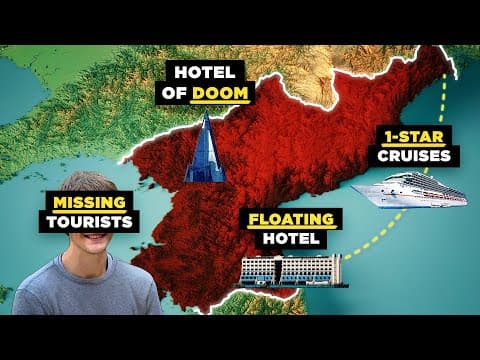
The history of tourism in North Korea is both bizarre and fascinating. After the Korean War, the capital city Pyongyang was rebuilt with Soviet assistance, but tourism infrastructure remained minimal until the 1980s. The North Korean government began to adopt tourism as a major economic strategy, especially in preparation for the World Festival of Youth and Students in 1989. This led to ambitious projects like the Ryugyong Hotel, which was intended to be the tallest hotel in the world but remains unfinished and has become a symbol of North Korea's economic struggles.
In the late 1990s, North Korea opened the Mount Kumgang tourist region to South Korean tourists, which initially saw success. However, this venture ended abruptly after a South Korean tourist was shot by a North Korean soldier in 2008, leading to a suspension of tours and the eventual nationalization of assets by the North Korean government.
Under Kim Jong-un, who took power in 2011, North Korea's approach to tourism shifted. Kim, educated in Switzerland, sought to develop the economy while advancing the country's nuclear capabilities. He invested heavily in tourism infrastructure, aiming to attract foreign visitors, particularly from China. However, the COVID-19 pandemic halted these efforts.
The geopolitical landscape has dramatically changed since the pandemic. North Korea's relationship with Russia has strengthened, particularly in light of the ongoing war in Ukraine. North Korea has reportedly earned billions by supplying military support to Russia, overshadowing the potential income from tourism. This shift has led to a focus on Russian tourists, while the prospect of reopening to Western tourists remains uncertain.
The future of tourism in North Korea is fraught with uncertainty. The regime's fear of foreign influence and the potential for information about its military activities to leak into the country complicate any plans for reopening. The brief experiment with Western tourists in early 2025 highlighted the regime's concerns about social media and the rapid dissemination of information.
As North Korea continues to navigate its isolationist policies while seeking foreign currency, the tourism industry remains in a precarious position. The regime's recent investments in tourism infrastructure may eventually pay off, but for now, the focus appears to be on maintaining control over information and limiting foreign influence. Until the geopolitical landscape shifts again, it seems unlikely that North Korea will fully reopen its doors to tourists from the West anytime soon.