
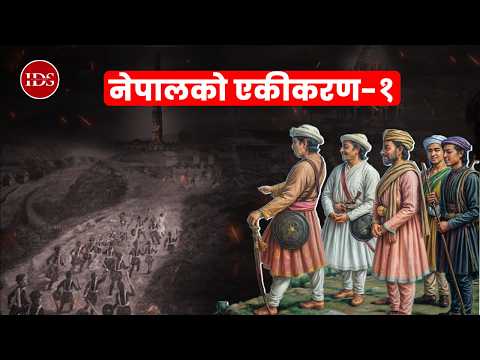
This blog post explores the early stages of Nepal's unification under King Prithvi Narayan Shah, detailing his strategic military campaigns, diplomatic maneuvers, and the eventual consolidation of power that led to the formation of Greater Nepal.
The history of Nepal's unification is a tale of ambition, strategy, and resilience. This blog post delves into the early years of King Prithvi Narayan Shah's reign, highlighting his efforts to consolidate various small states into what we now recognize as modern Nepal. Through a series of military campaigns and diplomatic strategies, Shah transformed the political landscape of the region.
In the early 19th century, the map of the region did not mention Nepal. Instead, it featured various small kingdoms such as Gorkha, Kantipur, Patan, Bhaktapur, and Makwanpur, each with its own identity. The ambition to unify these states began with Prithvi Narayan Shah, the king of Gorkha, who sought to expand his territory.
In B.S. 1795, a young Prithvi Narayan Shah, then just 16 years old, visited Bhaktapur and was captivated by the prosperity of the Kathmandu Valley. The fertile lands and vibrant culture ignited his ambition to conquer these kingdoms. Over the next three years, he established diplomatic relations and gathered intelligence about the political and economic dynamics of the valley.
Following the death of his father, King Narabhupal Shah, in B.S. 1799, Prithvi Narayan Shah ascended the throne at the age of 21. With newfound power, he was determined to capture the Kathmandu Valley, starting with an attack on Nuwakot, a strategic gateway to the valley. However, his initial attempt ended in defeat, mirroring his father's earlier failures.
The crushing defeat at Nuwakot motivated Shah to rethink his strategies. He traveled to Varanasi to procure weapons and train soldiers, returning with skilled warriors and modern warfare tactics. He also strengthened his royal treasury by collecting funds from the households of Gorkha, preparing for future military campaigns.
On Ashoj 15, B.S. 1801, Shah launched a successful attack on Nuwakot, capturing it and cutting off Kantipur's trade routes. This victory marked a significant step in his campaign, as it allowed Gorkha to gain control over vital trade routes and resources.
Emboldened by his victories, Shah ordered an attack on Kirtipur, which resulted in another defeat for Gorkha. The Kirtipurians, having prepared for the assault, outnumbered Shah's forces, leading to the loss of his trusted commander, Kalu Pandey. This defeat taught Shah the importance of strategy over brute force.
Realizing the need for a more calculated approach, Shah began forming alliances and employing espionage to create discord among the kingdoms of the valley. His focus shifted to capturing Makwanpur, his in-laws' kingdom, which he successfully invaded in B.S. 1819, avenging past humiliations.
After defeating Makwanpur, Shah faced a new challenge when King Dig Bandhan Sen sought assistance from the Nawab of Bengal. However, through guerrilla tactics, Shah's forces defeated the Bengali troops, further solidifying Gorkha's power.
After a prolonged blockade of the Kathmandu Valley, Shah planned another assault on Kirtipur. This time, with meticulous planning and a well-organized army, he successfully captured Kirtipur, marking a turning point in his campaign.
With Kirtipur under Gorkha control, Shah turned his attention to Kantipur. Taking advantage of a festival when the city was unguarded, he launched a surprise attack, leading to the capture of Kantipur. Lalitpur soon followed suit, surrendering without a fight.
The final major challenge was Bhaktapur, where King Ranjit Malla initially resisted. However, after a fierce battle, Bhaktapur fell to Shah's forces, completing the unification of the Kathmandu Valley.
With the conquest of the Kathmandu Valley, Prithvi Narayan Shah moved the capital from Gorkha to Kathmandu, marking the beginning of a new era for Nepal. His unification campaign continued until his death in 1831, leaving a legacy that shaped the future of the nation. The next part of this series will explore the subsequent developments in Nepal's history, including the rise of Bhimsen Thapa and the challenges that followed.
The unification of Nepal under Prithvi Narayan Shah is a testament to the power of ambition, strategy, and resilience. His ability to adapt and learn from defeats played a crucial role in shaping the nation we know today.



















