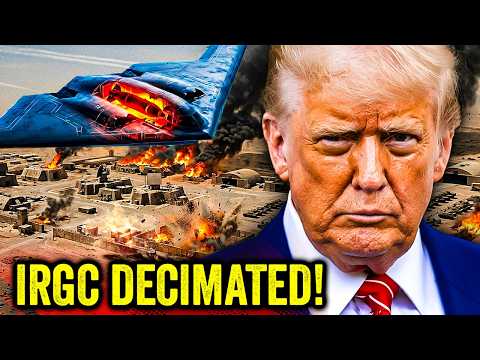
The ongoing Operation Epic Fury has devastated Iran's military capabilities, with the US and Israeli forces achieving air supremacy and destroying thousands of targets, including underground missile complexes using B-2 bombers. The Iranian regime faces internal collapse with mass desertions and a failing defense strategy, signaling a possible end to the Islamic Republic. This article explores the military campaign's phases, Iran's deteriorating situation, and the broader implications of this one
The current military campaign against Iran, known as Operation Epic Fury, is unfolding as one of the most lopsided and rapid conflicts in modern history. Within just over a week, the United States and Israeli forces have inflicted devastating damage on Iran's military infrastructure, signaling a potential collapse of the Islamic Republic's regime.
Historically, eliminating high-profile targets has taken years: it took 10 years to get Osama bin Laden, six years to defeat Hitler, two years for Milosevic, and nine months for Saddam Hussein. In stark contrast, the US-led campaign against Iran has achieved significant results in mere days.
The initial phase of Operation Epic Fury focused on:
This phase is now considered complete, having significantly dislocated and decimated every branch of the Iranian military.
The campaign has now shifted to dismantling Iran's defense industrial base, which includes missile production facilities, weapons factories, and underground ballistic missile silos.
Central to phase two are the B-2 stealth bombers, which undertake 37-hour round-trip missions from Whiteman Air Force Base in Missouri to Iran and back to Dyess Air Force Base in Texas. These bombers:
Iran invested decades building massive underground missile cities, designed by North Korean engineers to withstand American air campaigns. These tunnel networks, buried deep under mountains, were considered Iran's strategic ace.
However, the B-2 bombers have turned these bunkers into tombs by:
Missiles remain trapped underground, and any attempt to launch is met with immediate destruction by MQ-9 Reaper drones or F-35 fighters circling overhead.
The damage inflicted on Iran is staggering:
Members of Iran's military, including the paramilitary Basij militia under the IRGC, are openly abandoning their posts. Videos show soldiers stating the regime is finished and expressing a desire to surrender.
Israeli television reports mass desertions within the Revolutionary Guards, with those possessing financial means fleeing the country.
With the IRGC crumbling and the regime fracturing, the question arises: what is the real endgame?
Mark Thiessen of the Washington Post outlines three levels of victory within reach:
The campaign's success is evident as US and Israeli capabilities increase while Iran's capabilities continue to decline.
This conflict not only reshapes the geopolitical landscape but also has profound implications for global security and the future of the Middle East. The rapid and overwhelming success of Operation Epic Fury may set a precedent for future military engagements.
The ongoing military campaign against Iran represents an unprecedented display of air power and strategic precision. The destruction of Iran's military infrastructure, combined with internal regime collapse and mass desertions, signals a potential end to the Islamic Republic as it currently exists. As the campaign progresses into its next phases, the world watches closely to see how this historic conflict will ultimately conclude.