
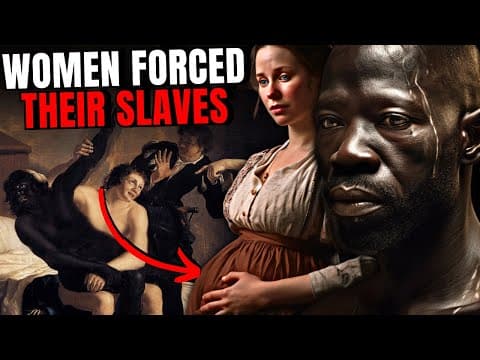
This blog post explores the often-overlooked abuse of black male slaves by elite white women during the Antebellum era, highlighting the intersection of power, gender, and race in the context of slavery in America. It discusses the roles of planter class women, the dynamics of sexual exploitation, and the physical violence inflicted upon enslaved men, ultimately challenging conventional narratives surrounding slavery.
The history of slavery is a painful reminder of humanity's capacity for cruelty and oppression. Slavery in America was deeply entrenched from the colonial era through the Antebellum Period, with enslaved Africans and their descendants subjected to forced labor, physical punishment, and various forms of degradation. The term "Antebellum" derives from Latin, where "ante" means before and "bellum" means war. In the context of American history, the Antebellum era refers to the period before the American Civil War, specifically the years between the late 18th century and the outbreak of the Civil War in 1861.
The Antebellum era was marked by significant growth and transformation in the United States, characterized by industrialization, westward expansion, and heated debates over slavery. Southern intellectuals and leaders gradually shifted from portraying slavery as an embarrassing and temporary system to defending it as a positive good. The Abolitionist Movement, which emerged during this time, faced harsh criticism from these leaders.
The demand for slave labor, coupled with the U.S. ban on importing more slaves from Africa, drove up prices for slaves, making it profitable for smaller farms in older settled areas like Virginia to sell their slaves further south and west. Most farmers in the South had small to medium-sized farms with few slaves, while large plantation owners, whose wealth was often reflected in the number of slaves they owned, wielded considerable prestige and political power.
While the dehumanization and mistreatment of slaves are well-documented, a lesser-known aspect is the abuse endured by black male slaves at the hands of elite white women, specifically those belonging to the planter class. These women were associated with wealthy plantation owners who relied heavily on slave labor to cultivate cash crops such as cotton, tobacco, and rice.
Using an intersectional sociohistorical analysis, this discussion delves into the often-overlooked history of the exploitation and mistreatment faced by black male slaves, exploring the factors that contributed to sexual encounters between planter class white women and enslaved men, the power dynamics involved, and the implications regarding sexual consent.
Slavery was not only a system defined by racial subjugation but also one that reinforced gender hierarchies. The planter class white women in the Antebellum South, while bound by societal expectations of femininity, held significant power within the context of slavery. They played active roles in maintaining and perpetuating the institution of slavery, wielding authority over the management and treatment of enslaved individuals, including black male slaves.
Historian Stephanie Jones Rogers, in her book "They Were Her Property," argues that white women were far from being passive bystanders in the business of slavery. Instead, they were active participants, shoring up their own economic power through ownership of enslaved people. Jones Rogers draws on interviews with formerly enslaved individuals conducted during the Great Depression, revealing that white girls were often trained in slave ownership and discipline from a young age.
One of the most distressing aspects of the abuse endured by black male slaves was sexual exploitation. Contrary to the dominant narrative that often portrays white women as passive or innocent, there were instances where they actively engaged in non-consensual sexual relationships and rape, exploiting their power and control over black male slaves. This perpetuated a cycle of sexual violence and degradation, further dehumanizing the already enslaved.
An example of this can be found in the autobiography "Incidents in the Life of a Slave Girl" by Harriet Jacobs, where she recounts how planter's daughters would take advantage of male slaves. Jacobs describes a situation where a planter's daughter selected one of the most brutalized slaves to father her child, illustrating the predatory nature of these relationships.
Plantation mistresses and elite women, like their male counterparts, were able to sexually control and abuse their slaves. They often threatened to accuse enslaved men of rape or attempted rape if they did not comply with their demands for sex. This manipulation utilized the patriarchal notion that women were weak and in need of protection, thereby reinforcing racial control over black male slaves.
The motivations behind the sexual exploitation of slaves by white women varied. Some may have acted out of boredom or sexual frustration, while others may have subconsciously sought to compensate for their lack of power in other aspects of their lives. Despite their own limited agency, these women often took out their frustrations on enslaved individuals through excessive cruelty and violence.
Physical violence was not limited to white male slaveholders; white women also participated in acts of brutality against black male slaves. This violence ranged from whipping and beating to inflicting other forms of corporal punishment, leaving lasting physical and psychological scars. A notorious example is Madame Marie Delphine Lalaurie, who was infamous for her extreme cruelty towards her slaves.
In 1834, a fire at Lalaurie's mansion revealed a torture chamber where slaves were found in horrific conditions, leading to public outrage and the eventual destruction of her reputation. Lalaurie's actions exemplify the extreme lengths to which physical abuse could go, highlighting the brutal reality faced by enslaved individuals.
Exploring the abuse of black male slaves by white women reveals an unsettling dimension of history that has often been overlooked or deliberately silenced. By confronting this painful reality, we challenge conventional narratives surrounding slavery and deepen our understanding of the complex power dynamics at play. Acknowledging these historical injustices is an important step towards building a more inclusive and equitable future.
What are your thoughts on this topic? Share your opinions in the comments section as we continue to explore the abuse of black male slaves in the Antebellum era.



















