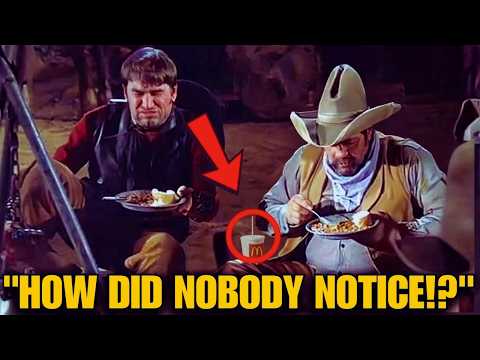
Blazing Saddles, released in 1974, revolutionized comedy with its fearless satire on racism and Hollywood conventions. Despite studio fears and casting challenges, including the replacement of Richard Pryor and a last-minute casting of Gene Wilder, the film became a cultural phenomenon. Deleted scenes and an accidental blooper reveal the chaotic, groundbreaking nature of its production and lasting impact on comedy.
Most people remember Blazing Saddles for its outrageous jokes, fearless satire, and the iconic moment where cowboys around a campfire change comedy forever with a scene Hollywood had never dared to show before. However, beneath the laughter lies a much stranger story filled with deleted scenes, casting disasters, and an accidental blooper that made it into the final cut unnoticed for decades.
Blazing Saddles never tried to hide its chaos. It broke rules, mocked conventions, and shattered the fourth wall in one of the most surreal endings ever put on screen. Yet, the deeper you look into its making, the more unbelievable the story becomes.
After seeing the finished film, the studio panicked. One particularly outrageous scene was quietly removed before audiences ever saw it. This scene involved a flirtation between Sheriff Bart and the glamorous singer Lily von Stup, where Lily teased Bart about a long-standing stereotype about black men. The scene escalated to a point where the lights go out, and in the darkness, Lily asks the question again, making the audience uncomfortable before Bart delivers a punchline that flips the joke on its head.
Mel Brooks, the director, admitted that although the punchline was hilarious, it crossed a line he wasn't sure audiences were ready for. He feared it might distract from the satire and overshadow the rest of the film, so he removed it. Early drafts included even more aggressive versions of this scene, which were never filmed but reveal the fearless writing process behind the movie.
On the surface, the story is simple: a corrupt land developer wants to force settlers out of a small frontier town called Rock Ridge by convincing the governor to appoint a black sheriff, expecting the racist townsfolk to panic and leave. Instead, Sheriff Bart proves smarter than everyone else, turning the political trick into a rebellion against ignorance, prejudice, and Hollywood myths about the Old West.
But the movie was really about America in the early 1970s—a country in turmoil with the Vietnam War's humiliating end, the Watergate scandal, collapsing public trust, and ongoing racism despite civil rights victories. Mel Brooks used comedy as a weapon to expose racism by exaggerating it to absurdity, forcing audiences to laugh at ideas once considered normal.
One of the most famous moments in Blazing Saddles is the campfire scene where cowboys eat beans and pass gas, creating a symphony of ridiculous sound effects. Today, it seems silly but harmless. In 1974, it was shocking—no major Hollywood movie had ever included audible flatulence as a central joke.
Studio executives were horrified, fearing it would ruin the film's reputation. Mel Brooks refused to remove it. After early test screenings where audiences laughed so loudly they drowned out the final line, Brooks added even more sound effects to extend the gag. This scene shattered the myth of the noble, clean cowboy by showing their human side.
The film's climactic finale abandons the Old West setting entirely. A massive brawl erupts, spilling out of the fictional town and smashing through studio sets into the real world, including a musical number on another set and eventually onto the streets of Hollywood.
Amid this chaos, a man wearing an ordinary sweater walks calmly across the frame, unaware of filming. Instead of stopping the shoot, Brooks decided to leave him in, making this random pedestrian an accidental extra in one of the most famous comedy endings ever filmed. This moment exemplifies Brooks' philosophy that sometimes mistakes are funnier than anything planned.
The role of Sheriff Bart was originally written for Richard Pryor, who helped write the screenplay and shaped many of the film's sharpest jokes. However, the studio refused to insure Pryor due to his reputation and legal troubles, making it impossible to hire him.
The role went to Broadway actor Cleavon Little, who played Bart with calm intelligence and confidence, creating an unforgettable character whose quiet delivery sharpened the satire.
Similarly, the role of the Waco Kid was initially given to an Academy Award-winning actor who had to be replaced on the first day due to severe alcohol withdrawal. Mel Brooks called Gene Wilder, who joined the film immediately and delivered a beloved performance characterized by soft voice, strange pauses, and unpredictable humor.
Together, Little and Wilder formed the emotional center of the film, giving the chaotic story heart.
When Warner Brothers executives saw the finished film, they hated it. They found the jokes offensive and the mix of satire, slapstick, and surreal humor confusing. One executive predicted it would destroy Mel Brooks' career.
The studio released the film quietly in a few major cities to limit potential damage. However, audiences loved it. Word of mouth spread rapidly, theaters extended showings, and crowds returned for repeat viewings. The film earned over $100 million, becoming one of the biggest comedy hits of the year and a cultural phenomenon.
Looking back, Blazing Saddles was radical for directly attacking racism, mocking Hollywood traditions, and shattering storytelling conventions—all while making audiences laugh harder than expected.
None of this happened by accident. The outrageous jokes, chaotic production, improvised moments, and even the accidental pedestrian reflect Mel Brooks' belief that comedy should be fearless and challenge people. Sometimes, making society look ridiculous is the best way to reveal its truths.
This approach changed comedy's future, influencing films and TV shows with self-aware humor, fourth wall breaks, and boundary-pushing satire. Few have matched the pure unpredictability of Blazing Saddles, a film where behind the laughter was something rare in Hollywood: fearless truth-telling through comedy.
Blazing Saddles remains a landmark film that not only entertained but also challenged societal norms and Hollywood conventions, proving that comedy can be a powerful tool for social commentary and change.