
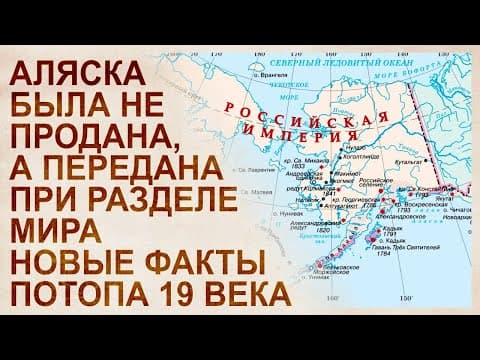
This blog post explores the historical context and hidden reasons behind Russia's sale of Alaska in 1867, examining climate change, trade routes, and the lost Russian presence in Hawaii. It delves into the implications of these events on global history and territorial divisions.
The sale of Alaska by Russia to the United States in 1867 has long been shrouded in mystery and speculation. Why did Russia sell such a vast territory, rich in natural resources, for a mere $7 million? This blog post aims to uncover the hidden reasons behind this historical event, exploring the geopolitical and environmental factors that influenced Russia's decision.
Alaska, covering over 1.5 million square kilometers, was primarily valuable to Russia for its fur trade. However, by the mid-19th century, the costs of maintaining and protecting this remote territory began to outweigh the profits from the fur trade. Notably, there were no military conflicts or claims from the United States that would have prompted such a sale. This raises the question: what compelled Russia to part with Alaska?
During the 19th century, significant climate changes affected global trade routes. The Northern Sea Route, which had previously facilitated communication between Russia and Alaska, became increasingly impassable due to ice. This shift made it difficult for Russian ships to reach Alaska, forcing the empire to reconsider its hold on the territory. The dangers of navigating around South America, particularly near Cape Horn, further complicated matters, as this route was fraught with storms and treacherous conditions.
Historically, the region known as Tartary, which included parts of Siberia and Western America, was not fully under Russian control until the early 19th century. Researchers suggest that the Pomors from Arkhangelsk had previously established trade routes to Alaska via coastal voyages. However, as the Northern Sea Route froze, these connections ceased, leading to the eventual sale of Alaska.
Count Nikolai Rezanov's ill-fated expedition to California in the early 19th century exemplifies the challenges faced by Russian traders. His journey to establish trade relations with the Spanish was cut short by his untimely death, which further illustrates the difficulties of maintaining connections with Alaska during this period.
An intriguing aspect of this narrative is the sugar industry in Arkhangelsk, which supplied sugar to all of Russia, including the imperial court. The raw materials for this industry were believed to be imported from Brazil, but alternative theories suggest that they could have been sourced from California via the Northern Sea Route. This connection hints at a broader network of trade that was disrupted by climatic changes.
Wilhelm Brant, a prominent merchant and industrialist, played a significant role in Arkhangelsk's economy. His investments in sugar refineries and exploratory expeditions highlight the importance of maintaining trade routes to North America. Tragically, Brant's sudden death in 1832, while preparing for an expedition to find a safe route to the Yenisei River, marked a turning point in these efforts.
The formal sale of Alaska occurred in 1867, when Russian Ambassador Eduard Stoeckl and American Secretary of State William Stewart signed the treaty. The Russian tricolor was lowered, and Alaska officially became part of the United States. However, the sale was not merely a financial transaction; it was a response to the geopolitical realities of the time, including the closure of the Northern Sea Route.
Interestingly, Russia once had a presence in Hawaii, with plans to establish a colony on the islands. The Elizabethan Fortress on Kauai serves as a reminder of this lost Russian influence. Despite initial successes in establishing trade relations with local tribes, the Russian presence was ultimately short-lived due to American expansionism and internal strife within the Hawaiian kingdom.
Climatologists have identified a significant drop in atmospheric temperatures around 1831, attributed to volcanic activity in the Kuril Islands. This climatic shift likely contributed to the freezing of the Northern Sea Route and the subsequent loss of communication with Alaska. The broader implications of these changes resonate with the historical narrative of territorial divisions and the fate of empires.
The sale of Alaska and the loss of Russian influence in Hawaii are intertwined events that reflect the complexities of 19th-century geopolitics and environmental changes. As we explore these historical narratives, it becomes clear that the decisions made during this period were influenced by a combination of economic, climatic, and political factors. Understanding these dynamics offers valuable insights into the historical context of territorial changes and the legacy of colonialism in the modern world.



















