
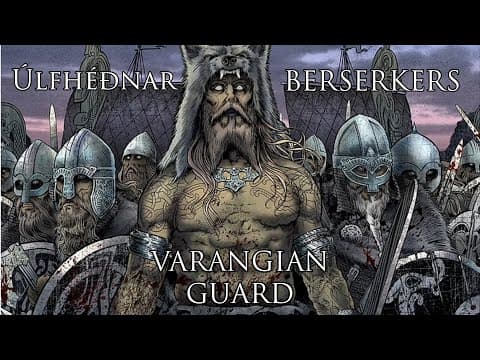
The Varangian Guard, a distinguished unit of the Byzantine Army from the late 9th to the 14th century, comprised Norse warriors who served as elite bodyguards and shock troops for Byzantine emperors. Their exceptional combat skills, loyalty, and unique cultural background left a lasting impact on Byzantine history, showcasing a remarkable fusion of Norse and Byzantine cultures.
The Varangian Guard was a distinguished unit of the Byzantine Army that existed from the late 9th to the 14th century. This elite group primarily comprised Norse Swedish and Rus warriors, who were handpicked to serve as personal bodyguards to the Byzantine emperors. Their exceptional combat skills, unwavering loyalty, and distinctive appearance made them an indispensable part of Byzantine military might.
The Varangian Guard was formed during the Viking Age, around the early 9th century, when Norse warriors began to explore and settle in Eastern Europe. While many Vikings targeted England, some ventured eastward, drawn by the allure of Arabic silver. These Norsemen, who settled in Eastern Europe, became known as the Rus, a term derived from Old Norse meaning "ones who row."
In the late 10th century, a dispute arose among the sons of Prince Sviatoslav of Kiev. Vladimir I of Kiev enlisted 6,000 warriors from Sweden to secure his region, which ultimately led to the foundation of the Varangian Guard. Less than a decade later, Byzantine Emperor Basil II sought military assistance from Vladimir to quell threats to his throne. In exchange for military support, Basil offered his sister's hand in marriage, contingent upon Vladimir's conversion to Christianity. Vladimir accepted, and he dispatched his Norse warriors to Constantinople, marking the beginning of the Varangian Guard's storied history.
The Varangian Guard served multiple roles within the Byzantine Empire. They acted as the personal bodyguards for the emperor, fought on the battlefield, and swore oaths of loyalty. Their duties also included policing responsibilities, such as guarding the Royal Treasury and serving as wardens in imperial prisons. The warriors patrolled the halls of the Great Palace, accompanied the emperor to war, and maintained order on the streets of Constantinople.
The Norse Varangian Guardsmen were easily recognizable by their long hair and the ornate dragons sewn into their chain mail. They often wielded battle axes, sometimes gilded with gold, and were known for their fearsome appearance and combat prowess. An Arab traveler described them as tall as palm trees, fair-skinned, and fearsomely armed. Their reputation for ferocity was further enhanced by the presence of Berserkers among their ranks, who were believed to enter a trance-like state that granted them superhuman strength.
One unique privilege of the Varangian Guard was the right to pillage the Imperial Treasury upon the death of an emperor. This practice, known as Palace pillaging, allowed many Varangians to return home as wealthy men, encouraging more Scandinavians to enlist. As the centuries progressed, many Norsemen converted to Christianity, and the old Norse gods faded from prominence.
One of the most famous figures associated with the Varangian Guard was Harold Hardrada. After fleeing Norway following the death of his brother, King Olaf II, Harold sought fortune in Constantinople. He became a member of the Varangian Guard and rose through the ranks to become their de facto leader. During his service, he encountered Arab Muslims for the first time during a naval battle in the Mediterranean, where the Vikings faced the devastating weapon known as Greek Fire.
Harold played a pivotal role in various military campaigns, including the conquest of Messina and other cities in Sicily. Despite the heavy-handed rule of the Byzantine leadership, which led to revolts among other mercenaries, Harold remained loyal to the emperor. His wealth and influence grew, and he became a protector of Empress Zoe during a tumultuous period of power struggles within the imperial court.
The glory days of the Varangian Guard began to wane in the 11th century. Following the Norman Conquest in 1066, exiled Anglo-Saxon warriors joined the ranks of the Guard, marking a new chapter in its history. The Fourth Crusade in 1204 led to the sack of Constantinople, where many Varangians met their end defending the city. Although the order was briefly reconstituted, it never regained its former prominence.
By the 15th century, the last of the Varangian Guard would have perished during the fall of Constantinople in 1453, when Mehmed the Conqueror took the city.
The story of the Varangian Guard exemplifies the remarkable fusion of cultures in the medieval world. Through their bravery, loyalty, and military prowess, Norse warriors left an indelible mark on Byzantine history. The Varangian Guard stands as a testament to the enduring legacy of these Norsemen who found a new home in the heart of Byzantium, shaping the Empire's destiny and contributing to the rich tapestry of human history.



















