
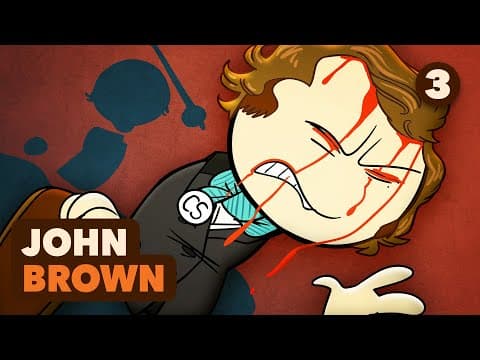
The caning of Senator Charles Sumner in 1856 marked a turning point in American politics, pushing John Brown to take violent action against pro-slavery forces in Kansas. This blog post explores the events leading to Brown's radicalization, the violent clashes in Kansas, and the emergence of Brown as a folk hero in the abolitionist movement.
On May 22, 1856, a shocking event unfolded in the Senate Chamber of Washington, D.C. Representative Preston Brooks brutally attacked Senator Charles Sumner with a cane, following Sumner's fiery speech condemning slavery and specifically targeting Brooks's relative, Senator Andrew Butler. This violent act symbolized the deepening polarization in the United States over the issue of slavery and served as a catalyst for John Brown's radicalization.
Sumner's speech, titled "The Crime against Kansas," criticized his pro-slavery colleagues and highlighted the violent realities faced by abolitionists in Kansas. Brooks's attack on Sumner was not just a personal vendetta; it represented the escalating tensions between pro-slavery and anti-slavery factions in the country. The bloodshed in the Senate foreshadowed the violence that would soon erupt in Kansas.
In late 1855, John Brown arrived in Kansas to find his five sons living in dire conditions. They were sick, short on food, and living in makeshift tents in a settlement they called Brown's Station. Brown quickly worked to nurse his sons back to health and build log cabins to shelter them from the harsh winter. However, the threat of violence loomed large as pro-slavery settlers surrounded their community, issuing death threats and committing acts of violence against abolitionists.
Tensions reached a boiling point when pro-slavery forces, emboldened by the support of the Franklin-Pierce administration, attacked the abolitionist stronghold of Lawrence in May 1856. Led by Sheriff Samuel Jones, an army of 800 border ruffians disarmed residents, sacked the town, and destroyed property, including the Free State Hotel. This brutal assault galvanized Brown and his supporters, pushing them towards violent retaliation.
Upon hearing of the violence in Lawrence and the caning of Sumner, John Brown decided to take action. He formed a militia company and targeted pro-slavery neighbors who had threatened his family. In a series of violent encounters known as the Potawatomi Massacre, Brown and his men killed several pro-slavery settlers, marking the beginning of his war against slavery.
Brown's violent actions triggered a cycle of retaliation that would lead to further bloodshed in Kansas. Over the next four years, at least 56 political killings occurred, and both sides engaged in brutal tactics, including the execution of unarmed Free Staters by border ruffians. The violence in Kansas became a microcosm of the national conflict over slavery, with both militias and U.S. Army troops hunting Brown.
In response to the attacks on his family and community, Brown rallied his militia and engaged in the Battle of Black Jack, where he successfully besieged a larger force of border ruffians. Despite his victories, the violence took a personal toll on Brown when his son Frederick was killed by a pro-slavery scout. This loss deepened Brown's resolve and transformed him into a folk hero among abolitionists.
As violence escalated in Kansas, John Brown's reputation grew. He became known as "Old Brown," a figure of resistance against southern violence. His bravery and commitment to the abolitionist cause garnered support from northern newspapers and citizens, while southern presses labeled him a murderer. Brown's actions shifted the narrative around abolitionism from petitions and peaceful protests to armed resistance.
By the summer of 1856, Brown had left Kansas and traveled to Boston and New York, where he sought financial support for his cause. He clashed with prominent abolitionists like William Lloyd Garrison, who advocated for nonviolent methods. However, Brown's radical approach resonated with a group of wealthy benefactors known as the Secret Six, who provided him with the resources he needed to escalate his fight against slavery.
John Brown's journey from a father protecting his family to a radical abolitionist leader illustrates the complexities of the struggle against slavery in America. The violence of Bleeding Kansas not only foreshadowed the Civil War but also solidified Brown's legacy as a controversial figure willing to take extreme measures for the cause of liberation. As tensions continued to rise, Brown prepared for his next significant act of defiance: the raid on Harper's Ferry, which would further ignite the national debate over slavery and its future in America.



















