
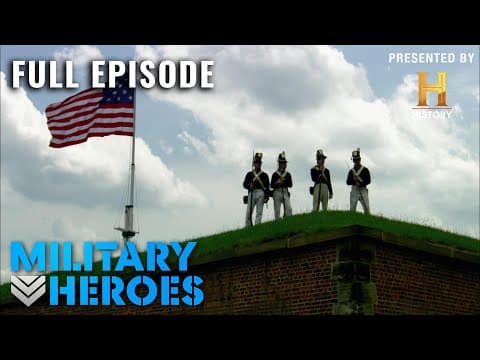
The War of 1812, often seen as America's first invasion, was marked by confusion, military blunders, and a struggle for national identity. Despite initial setbacks, the conflict ultimately solidified America's independence and led to the creation of the national anthem, symbolizing resilience and unity.
The War of 1812 was a pivotal moment in American history, often described as a strange and illogical affair. It was a conflict that took nearly three years to fight, yet its main causes had dissipated before the first shot was fired. Despite its chaotic nature, the war played a crucial role in shaping America's identity and direction.
In the early 19th century, America was a loose collection of states, bordered by vast wilderness and oceans. The economy was heavily reliant on shipping, with many Americans involved in maritime trades. However, this way of life was threatened by Great Britain's continuous violations of American shipping rights, particularly through the impressment of American sailors into the British Navy.
President Thomas Jefferson's Embargo Act of 1807, intended to protect American interests, backfired and hurt U.S. ports more than British trade. By 1810, approximately 5,000 American sailors had been forcibly taken by the British, igniting national outrage.
As tensions escalated, President James Madison, a key figure among the founding fathers, recognized that war was becoming inevitable. On June 1, 1812, he asked Congress to declare war against Great Britain, citing grievances such as trade interference and the incitement of Indian attacks on American settlers. However, not all regions supported the war; New England merchants, in particular, feared economic repercussions.
Despite opposition, Congress declared war on June 18, 1812. The decision was controversial, and protests erupted in cities like Baltimore. Madison believed that losing the war would mean losing independence, a sentiment shared by many Americans.
The United States entered the war unprepared, with a military force that was more of a constabulary than a fighting army. The British, on the other hand, had a well-trained and equipped military. Early military campaigns were disastrous for the Americans, with key locations like Mackinaw, Dearborn, and Detroit falling with little resistance.
However, a glimmer of hope emerged when the USS Constitution, one of the few ships in the fledgling U.S. Navy, achieved a significant victory against the HMS Guerriere, earning the nickname "Old Ironsides."
As the war dragged on, the British focused on their campaign against Napoleon in Europe, which limited their resources in North America. However, by 1814, after defeating Napoleon, the British turned their full attention to the United States. They launched a campaign to invade the Chesapeake Bay, culminating in the burning of Washington, D.C., on August 24, 1814.
The capital was left undefended due to poor leadership and miscommunication. President Madison and his administration fled as British troops entered the city, setting fire to government buildings, including the White House and the Capitol.
Following the destruction of Washington, the British set their sights on Baltimore. The city, galvanized by the recent events, prepared for an attack. Major George Armistead, the commander of Fort McHenry, oversaw the fort's defenses, including the creation of a massive flag to signal American resolve.
On September 13, 1814, the British bombarded Fort McHenry for 25 hours. Amidst the chaos, Francis Scott Key, a lawyer detained on a British ship, witnessed the bombardment and was inspired to write a poem that would later become the national anthem, "The Star-Spangled Banner."
As peace negotiations began in Ghent, Belgium, the British aimed to secure a decisive victory at New Orleans. Major General Andrew Jackson, known for his fierce determination, rallied a diverse group of defenders, including regulars, frontiersmen, and even pirates.
On January 8, 1815, the British launched a frontal assault against Jackson's well-prepared defenses. The battle resulted in a stunning American victory, with the British suffering heavy casualties while the Americans experienced minimal losses. This victory solidified Jackson's reputation as a national hero and boosted American morale.
The War of 1812, often referred to as the "forgotten war," was a defining moment for the United States. It confirmed America's independence and fostered a sense of national pride. The war's conclusion, marked by the Treaty of Ghent, restored territorial boundaries but did not resolve the issues that had sparked the conflict.
In the aftermath, both Madison and Jackson emerged as heroes, embodying the spirit of a new America. The war ultimately laid the groundwork for the nation's future, proving that the United States could stand against foreign powers and shaping its identity as a resilient and united nation.



















