
The American Civil War featured numerous dangerous and grueling jobs, from operating primitive submarines and hot air balloons to serving as color bearers and spies. This blog post explores the most perilous roles during the conflict, highlighting the extreme risks and hardships faced by those involved.
The American Civil War, fought between 1861 and 1865, was a brutal conflict that resulted in approximately 620,000 casualties. While the war is often remembered for its battles and strategies, it also involved a range of dangerous and grueling jobs that soldiers and civilians undertook. This post explores some of the worst jobs during the Civil War, revealing the extreme risks and hardships faced by those involved.
In 1861, 11 pro-slavery states attempted to secede from the United States, leading to the formation of the Confederate States of America. As the war progressed, both sides sought technological advancements, including the use of submarines. The Union launched the USS Alligator, a 47-foot long submarine that unfortunately sank during a storm before seeing battle. The Confederates had slightly more success with the HL Hunley, a cramped cylindrical sub that could travel 30 feet underwater.
The Hunley was manned by eight crew members who operated a hand-cranked propeller. Tragically, the submarine sank during its first two combat missions, resulting in the loss of 13 of its 16 sailors. However, in 1864, the Hunley became the first submarine to sink an enemy ship, the USS Housatonic, using a spar torpedo. The explosion also claimed the Hunley, leaving only three of the 24 crew members alive. The terrifying experience of being trapped in a flooding submarine is hard to imagine.
Air warfare during the Civil War was rudimentary compared to modern standards. In 1861, Thaddeus Lowe founded the Balloon Corps, which used hot air balloons to spy on Confederate troop movements. While the balloons were made of silk and could withstand musket fire, they were still vulnerable to artillery. Union balloons were never shot down, but the ground crew faced significant danger as they were easy targets for Confederate fire. The job of a balloon pilot was fraught with peril, as they had to navigate the skies in a highly visible and flammable craft.
In the chaos of battle, soldiers often lost their way, making the role of the color bearer crucial. These soldiers carried their regiment's flag into battle, serving as a rallying point for their comrades. However, this job was incredibly dangerous, as enemy forces specifically targeted color bearers to disrupt charges. If a color bearer attempted to flee, they faced execution for desertion. The life expectancy of a color bearer was significantly lower than that of regular soldiers, with many being killed or wounded during engagements.
Despite regulations against underage soldiers, many teenagers and even children served in the Civil War. Drummer boys, often as young as nine, played crucial roles in conveying orders during battles. They stood behind the front lines, exposed to stray cannon fire. The youngest casualty of the war was a 12-year-old drummer boy named Charlie King, who was killed during the Battle of Antietam.
Similarly, the Union Navy recruited young boys as powder monkeys, responsible for transporting gunpowder to cannons on warships. These boys faced immense danger, as a single spark could lead to catastrophic explosions. Despite their critical roles, they were often paid significantly less than adult sailors.
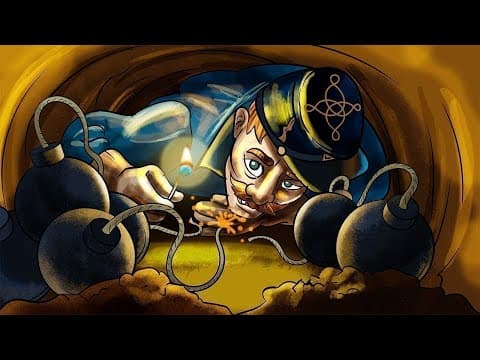
The Siege of Petersburg, which lasted 292 days, was marked by a daring plan to tunnel under Confederate lines and detonate explosives. Lieutenant Colonel Henry Pleasants ordered two men to crawl through a filled tunnel to check on a fuse. They successfully relit it and escaped just before a massive explosion killed 278 Confederates. However, the Union soldiers who charged into the resulting crater found themselves trapped and suffered heavy casualties, illustrating the futility of the operation.
Steam trains were vital for transporting troops and supplies during the Civil War, but working as a train driver was perilous. Both sides targeted enemy trains, and the Confederates devised a method called the coal torpedo, a bomb disguised as coal. While they failed to successfully use this tactic on trains, they did manage to sink a Union steamboat, highlighting the constant danger train drivers faced.
The Union's Anaconda Plan aimed to blockade Southern ports, leading to the recruitment of blockade runners. These sailors used small, fast boats to evade Union ships and deliver supplies to the Confederacy. While successful runners were well-compensated, the job was incredibly risky, with many ships captured or destroyed.
The Civil War was notorious for its brutal injuries, leading to a high demand for surgeons. Medical practices were primitive, and many surgeries resulted in amputations. Field hospitals were often unsanitary, leading to rampant disease. Surgeons faced the grim reality of performing countless operations while risking their own health in the process.
During the Battle of Gettysburg, the First Minnesota Regiment faced overwhelming odds, charging against 18,000 Confederate soldiers. Despite their bravery, only 47 of the 262 men survived. Their sacrifice was crucial in holding the line, but it exemplified the extreme dangers faced by soldiers during the war.
Protecting President Abraham Lincoln was a high-stakes job, especially after multiple assassination attempts. One bodyguard, John Frederick Parker, famously fell asleep while on duty, allowing John Wilkes Booth to assassinate Lincoln. This failure marked Parker as one of the most infamous bodyguards in history.
The use of landmines by the Confederates created a dangerous job for Union soldiers tasked with clearing them. Many soldiers were injured or killed while attempting to dig up mines. Similarly, picket duty involved standing guard close to enemy lines, often resulting in death if an attack occurred. The isolation and danger of these roles made them some of the most perilous jobs in the war.
The American Civil War was marked by countless dangerous and grueling jobs, from operating submarines and hot air balloons to serving as spies and color bearers. The extreme risks and hardships faced by those involved in these roles highlight the brutal reality of the conflict. After exploring these harrowing experiences, it is clear that many of these jobs were among the worst imaginable during this tumultuous period in American history.



















