
This blog post explores the top ten greatest rulers in European history, highlighting their significant contributions, political strategies, and lasting legacies that shaped the continent and beyond.
Throughout history, Europe has been shaped by remarkable leaders whose reigns have left indelible marks on the continent. This post delves into the top ten greatest rulers in European history, examining their contributions, political acumen, and the legacies they left behind.
Queen Elizabeth I reigned from 1558 to 1603 as the last monarch of the Tudor dynasty. Known as the Virgin Queen, she was a formidable political strategist who navigated a nation divided by religious strife. Elizabeth's refusal to marry was a deliberate choice to maintain control over her kingdom. Under her reign, England defeated the Spanish Armada and entered the Elizabethan Golden Age, a period marked by flourishing arts and exploration. Her legacy as a powerful female monarch has influenced subsequent queens, establishing a model of queenship that endures to this day.
Otto von Bismarck, often hailed as one of the greatest statesmen in European history, served as the Prime Minister of Prussia and the first Chancellor of the German Empire. His political brilliance and statecraft were pivotal in the unification of Germany in 1871. Bismarck's policies prioritized the needs of the state, leading to the establishment of the world's first welfare state and a period of peace in Europe that lasted until World War I. His legacy as a master of realpolitik and a unifier of Germany remains significant in European history.
Known as the Sun King, Louis XIV reigned for an unprecedented 72 years, making him the longest-reigning monarch in history. His reign epitomized absolute monarchy, famously declaring, "L'état, c'est moi" (I am the state). Louis centralized power, diminished the nobility's influence, and was a great patron of the arts, fostering a cultural golden age in France. His construction of the Palace of Versailles remains a symbol of royal grandeur and his lasting impact on European politics and culture.
Justinian I, known as Justinian the Great, was one of the most significant Roman emperors. His reign lasted over 30 years, during which he sought to restore the Roman Empire's former glory. Justinian is renowned for his monumental legal reforms, including the Justinian Code, which laid the foundation for modern legal systems in Europe. His architectural achievements, such as the Hagia Sophia, and his military conquests in Africa, Italy, and Spain, solidified his legacy as a transformative ruler.
Constantine the Great marked a pivotal transition in Roman history, shifting from a pagan empire to a Christian one. He was the first Christian emperor and established Constantinople, which became a major center of power for centuries. His administrative reforms contributed to the stability of the Roman Empire, allowing it to endure for over a millennium. Constantine's legacy is profound, as he played a crucial role in shaping the future of Europe and establishing the foundations of medieval Christendom.
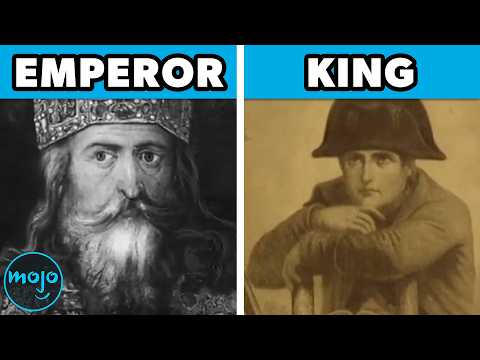
Charlemagne, often referred to as the Father of Europe, expanded the Frankish Empire and was crowned Emperor of the Romans by Pope Leo III in 800 CE. His reign marked a turning point in the medieval period, laying the groundwork for Western Europe as a political entity. Charlemagne's efforts to unite Christian Europe had a lasting impact on Western civilization, and his legacy continues to be felt today.
Julius Caesar was a pivotal figure in Roman history, known for his military conquests and political reforms that transitioned Rome from a republic to an empire. His victories in Gaul significantly increased Rome's wealth and influence. Appointed dictator, Caesar centralized authority and implemented reforms that transformed the political landscape. His assassination in 44 BCE, intended to restore the republic, ironically paved the way for the rise of the empire he sought to prevent.
Napoleon Bonaparte is often regarded as one of the greatest military leaders in history. His rise to power reshaped the political landscape of Europe, and his military genius was evident in battles such as Austerlitz and Vagram. Napoleon's reforms spread the ideals of the French Revolution across Europe, leaving a lasting impact on modern governance and society. Despite his controversial legacy, his contributions to European history are undeniable.
Augustus, the first emperor of Rome, transformed the Roman Republic into a powerful autocracy. His reign initiated the Pax Romana, a golden age that lasted for two centuries. Augustus implemented extensive reforms across various sectors, including the military and public works, earning Rome the title of the Eternal City. His legacy set a high standard for future rulers, and his influence is still felt in modern governance.
Taking the top spot is Alexander the Great, whose conquests opened the East to Western influence and facilitated cultural exchange between Europe and Asia. Known for his undefeated record in battle, Alexander's military strategies and rapid expansion of his empire were unprecedented. He founded numerous cities, many named Alexandria, and aimed to create a culturally diverse empire. Despite his early death at 32, his vision and leadership left a legacy that has inspired countless leaders throughout history.
In conclusion, these rulers not only defined their eras but also shaped the course of European history. Their legacies continue to influence modern governance, culture, and society. Did your favorite ruler make the list, or is there someone else you believe deserves recognition?



















