Touring bands often face high expenses and thin margins, making it challenging to earn money solely from merch sales. Success comes from years of consistent touring, building a fanbase in person, and maintaining good relationships in the industry. Bands earn through door deals or guarantees, and growth is gradual, requiring patience and dedication.
If someone asked you, "How do touring bands make money?" you might immediately say, "Merch." After 20 years of touring, I can tell you the answer is a little more depressing.
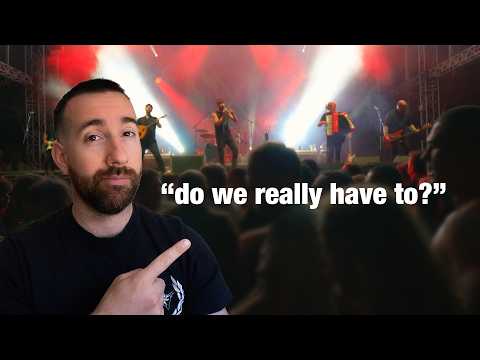
I play in a band called the Rumjacks, and we're on the road several months out of the year. The live music industry is notoriously cutthroat. Expenses are extremely high, and profit margins are thin. However, that doesn't mean no one is making money. If there were zero dollars to be made, bands wouldn't keep touring just on hopes and dreams.
For example, if we do a six-week tour, I can pay my mortgage for a few months if I don't spend the money elsewhere. But it's not just about having the best merch table with slick designs, varsity jackets, scarves, or soccer jerseys. If no one shows up to your shows, no one will buy merch.
Filling rooms is the first step to making money. Many assume that social media presence and going viral will fill venues. However, this isn't always the case. Even a music YouTuber with 800,000 subscribers can lose thousands of dollars on tour because online popularity doesn't always translate to in-person attendance.
You can follow all the TikTok trends and social media strategies, but that only grows your online presence. You still have to grow your fanbase in person.
When searching for a manager, I spoke with an industry veteran who explained that record labels now categorize artists as either online artists or IRL (in real life) artists. Many labels have faced the problem of signing artists based on viral success, only to find they can't fill rooms on tour and lose money on advances.
For this discussion, we're focusing on IRL artists who play live shows and tour.
Bands typically get paid through two types of deals:
Door Deal: The band receives a percentage of the door (ticket sales). For example, an 85% door deal on a $10,000 door means the band takes home $8,500. If few people show up, the band earns little.
Guarantee: The band is paid a fixed amount regardless of ticket sales. For example, a $5,000 guarantee means the band gets $5,000 whether 10 or 2,000 tickets are sold.
There are also hybrid deals like guarantee plus door, but these two are the most common.
As a headliner, selling more tickets and filling bigger rooms means more money. The Rumjacks moved from Australia to Europe in 2016 and started touring extensively, sometimes for three months at a time. Early shows were often in small venues with low attendance, sometimes only 10 to 15 people.
Despite this, the band kept returning to the same cities year after year, sometimes twice a year.
I joined in 2020, and by 2021, I saw the results of years of consistent touring. We started pulling crowds of 600 people in places like Zubia, Poland, which was a new experience for me.
Currently, we're touring in Spain, a notoriously tough market for us. When the band first played Madrid, they drew about 50 people. Over the years, attendance grew:
In Spain, pre-sales are unreliable because most people buy tickets at the door, making planning difficult.
Similarly, in Odo, we opened for Moscow Death Brigade in 2022, then returned with Grade Two, and finally sold out a venue on our own without an opener.
Looking at the map of Europe, this band has been touring for 10 years, hitting many of the same cities repeatedly. Touring takes a huge amount of time — often half your life if you're a full-time musician.
It requires patient determination and hard work. While some bands blow up overnight, most have to play the long game.
Social media and online marketing are important, but in-person growth happens year after year. It's a marathon, not a sprint.
Some shows will be smaller than previous ones, but the only way to sustain this lifestyle is to truly love what you do. I would tour even if I didn't make money, though I would likely work full-time and take clients on the road, which I still do occasionally.
I come from a marketing background and maintain one foot in the corporate world. I often work from green rooms, hotels, and long van rides.
The key to making money as a touring band is:
If you want to hear how we lost $50,000 playing arenas, that story is available in another video.
Touring bands face many challenges in making money. It's not just about merch or going viral online. It takes years of dedication, consistent touring, and building a loyal fanbase in person. Bands must be patient, professional, and passionate about their music to succeed financially in the live music industry.