Flock Safety's AI-driven traffic cameras are deployed nationwide, capturing detailed vehicle data and tracking movements without warrants or public knowledge. These cameras build digital profiles of vehicles, accessible to police and private entities, raising serious privacy concerns and legal challenges. Citizens are urged to demand transparency and regulation to protect their privacy rights.
If you're driving anywhere in the United States, chances are you are already under constant surveillance. This is not just about speed traps or red light cameras anymore. A new wave of surveillance technology, spearheaded by Flock Safety, is quietly monitoring your every move on the road.
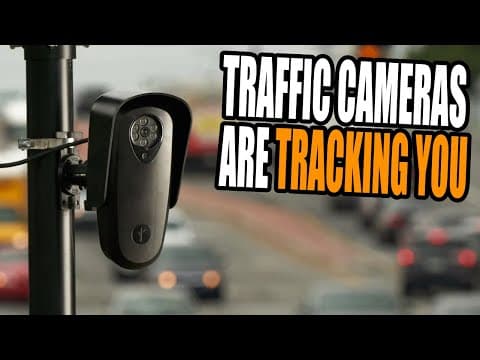
Flock Safety cameras are sleek, solar-powered, AI-driven devices installed on poles in neighborhoods, outside schools, grocery stores, and along major roads. Unlike traditional traffic cameras, these do not enforce speed or traffic laws. Instead, they serve as surveillance tools that capture detailed information about your vehicle.
These cameras use automated license plate recognition (ALPR) and vehicle fingerprint technology to collect high-resolution images of your vehicle's rear. They record:
They operate 24/7 using infrared imagery, capable of capturing data even when vehicles are moving at 100 miles per hour from 75 feet away.
The data collected by these cameras is instantly uploaded via cellular towers to Flock's cloud servers, where it is stored for 30 days. Approved users, including police departments across state lines, homeowners associations (HOAs), apartment complexes, and private businesses, can access this data through a web portal without a warrant or your consent.
This means that if you drive from Georgia to New York, every Flock camera you pass logs your journey, creating a detailed digital trail of your movements.
Since its founding in 2017 in Atlanta, Flock Safety has grown into a $3.5 billion surveillance empire with over 900 employees. As of 2024, they have deployed between 40,000 and 60,000 cameras across 42 states in more than 5,000 communities.
Some examples of deployment include:
Nationwide, Flock logs over 1 billion vehicle scans per month. Each camera costs about $2,500 per year, is solar powered, requires no wiring, and can be installed within hours—often without public notice or approval.
Flock Safety claims their cameras help solve approximately 2,200 crimes daily. Some reported successes include:
These benefits highlight the potential for public safety improvements, but they come with significant privacy trade-offs.
The reality is that everyone is tracked, regardless of whether they are suspected of a crime. There is no opt-out option for the public, only a "safe list" for VIPs. The cameras can capture images inside your car, including your children, groceries, and political stickers.
Data is shared nationwide, meaning a traffic stop in Texas could reveal your travel history in New York. There are no uniform regulations governing data retention, access, or sharing, allowing some jurisdictions to keep data indefinitely.
Civil liberties organizations like the ACLU and the Electronic Frontier Foundation have labeled this mass surveillance. There have been documented abuses of ALPR systems by rogue officers stalking ex-partners, journalists, and activists.
Data breaches remain a concern despite Flock's assurances of cloud security.
Most courts have ruled that there is no reasonable expectation of privacy for license plates in public. However, a 2024 ruling in Norfolk, Virginia declared that the Flock system constitutes a Fourth Amendment search, requiring a warrant.
The Institute for Justice has filed a federal lawsuit arguing that Flock creates detailed movement profiles without probable cause. A victory in this case could significantly limit such surveillance.
While these cameras can aid in crime solving, they also create a chilling effect. People may avoid protests, places of worship, gun shops, or clinics out of fear of being tracked.
Surveillance cameras are often installed first in low-income and minority neighborhoods, raising concerns about disproportionate targeting.
Many installations occur without permits or public approval, further eroding community trust.
Flock Safety's surveillance network represents a new level of government and private monitoring on American roads. While it offers some public safety benefits, it comes at the cost of privacy and civil liberties.
Liberty should not come with a tracking device. It is crucial for citizens to stay informed, demand accountability, and push back against unchecked surveillance before there is nowhere left to hide.
Have you noticed these cameras in your town? Are you comfortable with your movements being tracked and logged without your knowledge or consent? The time to act is now.
Thank you for reading. Stay vigilant and protect your privacy.