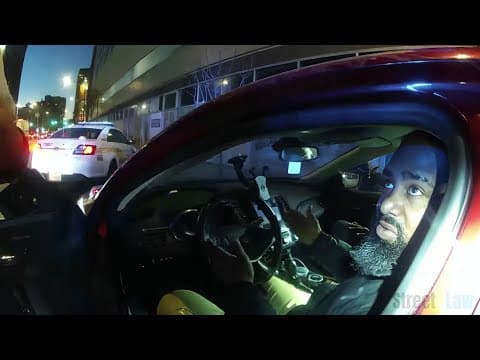
On January 4, 2024, Joshua Neely was stopped by police for driving with a suspended registration. His refusal to provide identification escalated the situation, leading to his arrest for obstruction. This incident raises questions about compliance, rights during traffic stops, and police procedures.
On January 4, 2024, a traffic stop involving Joshua Neely became a contentious encounter with law enforcement after he was pulled over for driving with a suspended vehicle registration. This incident highlights the complexities of police interactions, individual rights, and the consequences of non-compliance during traffic stops.
The police initiated the stop after discovering that Neely's car registration was suspended due to mandatory insurance requirements. Upon approaching the vehicle, officers requested Neely's driver's license and insurance information. However, Neely refused to comply, leading to a tense exchange.
The officers explained to Neely that he was being detained because his vehicle's registration was suspended, which is considered a violation of the law. They reiterated the need for his driver's license and insurance, stating:
"Can I please get your driver's license and insurance?"
Neely responded with confusion and defiance, questioning whether he had committed a crime. He stated:
"What crime did I commit? Suspended registration mandatory insurance."
This back-and-forth continued as Neely insisted he had not committed a crime, despite the officers' explanations.
As the conversation progressed, Neely's refusal to provide his identification led to increased tension. The officers warned him that failure to comply could result in arrest. Neely maintained his stance, arguing:
"I do not consent to give you my information."
The officers attempted to clarify the situation, explaining that his suspended registration constituted a crime, and thus they were legally entitled to request his identification. Neely, however, continued to assert his rights, stating:
"You need my consent."
Neely's insistence on not providing his personal information without consent became a focal point of the encounter. He argued that the officers needed a warrant to search his vehicle or access his personal belongings. The officers countered that his suspended registration implied consent for them to request identification.
As the situation escalated, a supervising officer, Sergeant Williams, arrived on the scene to mediate. He reiterated the need for Neely to step out of the vehicle and comply with the officers' requests. Neely, still resistant, expressed concern about the implications of stepping out of the vehicle, fearing it would be seen as consent to search his property.
Sergeant Williams attempted to reassure Neely, stating:
"I'm a supervisor on scene. I'm here to hear your side of the story."
Despite this, Neely remained adamant about his rights and questioned the legality of the officers' actions. He stated:
"I want to know the actual crime that I'm committing."
Ultimately, the situation reached a breaking point when the officers insisted that Neely step out of the vehicle. After a prolonged exchange, Neely was taken into custody for obstruction. The officers explained that his refusal to provide identification and comply with lawful orders constituted obstruction of justice.
Following the incident, Joshua Neely was charged with obstruction. This charge stemmed from his non-compliance during the traffic stop, which escalated the situation and led to his arrest.
The encounter between Joshua Neely and law enforcement raises significant questions about individual rights during traffic stops, the responsibilities of drivers, and the authority of police officers. While Neely maintained that he had not committed a crime, the officers were acting within their legal rights to enforce traffic laws. This incident serves as a reminder of the importance of understanding both legal obligations and rights during interactions with law enforcement.