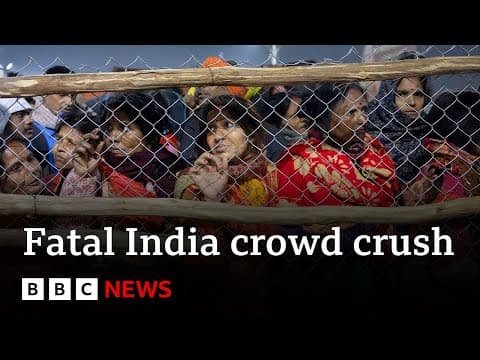
A tragic crowd crush at the Kumbh Mela festival in India resulted in at least 30 deaths and 60 injuries, highlighting the dangers of large gatherings and the need for better crowd management.
At least 30 people have lost their lives and 60 others have been injured in a devastating crowd crush during the Kumbh Mela festival in northern India. This festival, known as one of the world's largest religious gatherings, attracts millions of devotees who come to participate in a sacred bathing ritual in the Ganges River.
Witnesses have described chaotic scenes as attendees attempted to escape the crush, with personal belongings scattered across the ground. The atmosphere turned frantic as a massive crowd gathered for the bathing ritual, leading to a surge of people pushing and shoving in an attempt to reach the holy waters.
One eyewitness recounted, "There was a huge crowd gathered for bathing when suddenly people started climbing over each other, leading to pushing and shoving. I was sitting near a barricade, and in the midst of the pushing, the entire crowd fell upon me, trampling me as it moved forward."
The tragedy struck as the crowd surged from both directions—those heading to the ritual bath and those returning. The crush was particularly devastating for vulnerable individuals, including the elderly and women, who were easily overwhelmed. Many victims were left without assistance as the chaos unfolded.
A heart-wrenching account from a survivor revealed, "We were sleeping at the Stampede site around midnight when the police came and beat us with sticks, telling us to go and bathe immediately. Just then, a large crowd surged forward, pushing and trampling us, and in that chaos, my sister-in-law lost her life."
Samira Hussein, a correspondent reporting from the scene, described the atmosphere leading up to the incident. "It was a race from the very beginning. Tension was already building as Indian police forces broke through their own barriers, sprinting to disperse the crowds. Faith drove these people here, wanting to bathe in the holy waters to wash away their sins. Instead, many were whisked away injured or worse."
The aftermath of the crush left the area littered with shoes, blankets, empty water bottles, and backpacks, remnants of the chaos that ensued. Eyewitnesses reported that hundreds of people were sleeping on the riverbanks, and as the crowd surged, it became impossible to maintain order.
One witness stated, "A surge of people came from behind; there was nothing the people in front could have done. No one followed any rules. The police came, but it was too late."
The emotional toll of the tragedy is profound, with many families mourning the loss of loved ones. One woman shared her grief, stating, "My mother fell as the crowds began pushing; that was the last time I saw her." Another survivor recounted, "I fell in the crush, and after that, I couldn't find my husband."
What was meant to be a festival celebrating faith has instead left many grieving and searching for answers in the wake of this disaster. The Kumbh Mela, a symbol of devotion for millions, has been marred by this tragic event, raising questions about crowd management and safety at large gatherings.
The Kumbh Mela festival, which draws millions of participants, serves as a reminder of the potential dangers associated with large crowds. As the nation mourns the loss of life, it is crucial to reflect on the need for improved safety measures and crowd control to prevent such tragedies in the future. The hope is that future gatherings can honor the spirit of faith while ensuring the safety of all attendees.