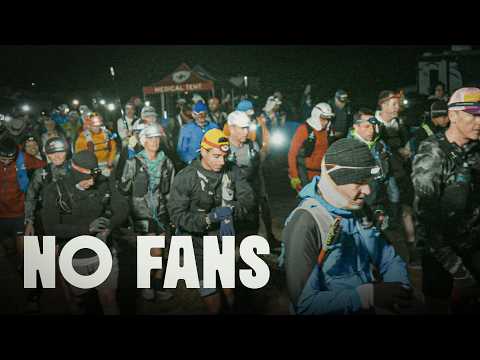
Trail running is experiencing rapid growth in participation and product demand, with more sponsored athletes and faster race times. However, the sport struggles to build a sustainable fan base, as the current growth is driven by investment and participation rather than fandom. Without a strong fan experience and scalable attention, the professional layer remains fragile, risking the sport's long-term sustainability.
Trail running is booming. More people are hitting the trails, more brands are entering the market, and more money is flowing into the sport. On the surface, it looks like trail running is having a breakout moment. However, beneath this apparent growth lies a significant problem: the sport is scaling participation but not fandom.
Sometimes what appears as growth is actually just investment. Brands and sponsors are spending money to create momentum, but this investment can disappear if it is not supported by a solid foundation of fans. At the elite level, we see more sponsored runners and course records being shattered because these athletes have more time to train thanks to sponsorships. Big contracts are being discussed, giving the impression that a professional sport is emerging.
However, this professional layer is fragile because it is sustained by investment rather than a growing fan base. While running participation is undeniably increasing—races are selling out faster, more people are showing up at trailheads, and lotteries for entry are becoming more competitive—this does not automatically translate into a sport that people follow passionately.
There is a crucial difference between more people doing a sport and more people following it. Participation builds the base of a sport, but fandom builds its ceiling. Fans watch, care, follow stories, and spend money over time, creating a sustainable ecosystem. Participation is finite—you can only run so much and buy so many shoes—whereas fandom compounds and grows.
Currently, trail running brands can pay athletes because people buy gear, which is tied to participation. But without a fan base that monetizes attention through merchandise, media, and access, the sport lacks leverage to sustain itself long-term.
Trail running has not yet figured out how to convert casual interest into invested fandom. The fan experience feels accidental rather than designed. When watching race coverage, unless you already know the athletes or the course, it is difficult to understand what is happening. There is no clear narrative, no continuity between races, no defined season, no team identities, and no structure that carries meaning from one event to the next.
This lack of structure means that missing a race does not feel like missing anything important. The sport is built for the runner experience, not the fan experience. Race start times, course designs, and coverage are optimized for participants, not for viewers or fans.
The sport values closeness and community, which contributes to its charm. The inaccessibility and lack of polish are part of the identity of trail running. It is not corporate or slick, and many appreciate this authenticity. However, this charm comes with a trade-off: it limits the sport's ability to build a scalable fan base.
Without fans, there is no scalable attention and no scalable money. For example, the author's children, who do not run, have no interest in watching current trail running coverage. It is hard to create new fans who do not already have a connection to the sport.
Athletes earn more when fan attention is monetized, not just when products sell. Fans buy jerseys, pay for access, and invest emotionally and financially in the sport. This creates leverage for athletes and the sport as a whole.
The author expresses willingness to buy jerseys of favorite athletes and pay for closer access to races, similar to other sports like college football. This kind of fan engagement is currently missing in trail running.
Right now, the professional layer of trail running is supported from the top down by brands and investment, not from the ground up by fans. This creates a risk: if investment slows, the sport will quickly reveal what is truly sustainable.
The problem is not talent, interest, or growth in participation. The problem is that the sport has not been built for the fan. Trail running is succeeding as a category—people are running and buying gear—but it is not yet succeeding as a spectator sport.
To truly scale, trail running must focus on the fan experience. This means creating clear narratives, structured seasons, recognizable teams or athletes, and accessible coverage that allows new fans to follow and invest in the sport.
Events like Western States and UTMB represent the biggest moments in trail running, not just as races but as experiences to follow. Until the fan experience matters as much as the runner experience, trail running will continue to grow in participation but will struggle to become a fully scaled professional sport.
Trail running is at a crossroads. Its rapid growth in participation and product demand is impressive, but without building a sustainable fan base, the sport risks hitting a ceiling. Investment and sponsorships can only take it so far. To ensure long-term success, trail running must evolve to engage fans, monetize attention, and create a professional ecosystem that thrives from the ground up.
Only then will trail running transition from a popular activity to a truly scalable and sustainable sport that captivates audiences worldwide.