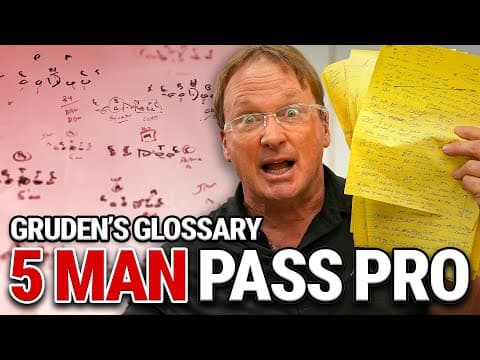
This blog post delves into the intricacies of 5-man pass protection in football as explained by Jon Gruden. It covers the essential calls, communication strategies, and the importance of protecting the quarterback. Gruden emphasizes the need for clarity and teamwork among players to execute effective pass protection, detailing specific calls like 82, 83, Ron, Lou, and Bang R. The post serves as a comprehensive guide for players and coaches to enhance their understanding of pass protection.
Welcome back to Gruden's Glossary, where we aim to ensure that everyone involved in football is on the same page. One of the most critical aspects of the game is pass protection, particularly when it comes to safeguarding the quarterback. In this post, we will explore the fundamentals of 5-man pass protection, including key terminology, communication strategies, and the importance of teamwork.
In football, protecting the quarterback is paramount. If the quarterback is not adequately protected, the entire offensive strategy can collapse. Therefore, understanding how to execute pass protection effectively is essential for any team aiming to succeed on the field.
5-man protection involves five blockers: two guards, two tackles, and a center. This means that only these five players are responsible for blocking during a pass play, while everyone else, including the running back, has a free release. In our system, we refer to this protection as either 82 or 83.
When the quarterback calls 82 or 83, it indicates that the offensive line is on its own with no additional help. This is crucial for the players to understand, as it sets the stage for how they will execute their blocking assignments.
The quarterback and center play a vital role in executing 5-man protection. They must communicate effectively to ensure that everyone understands their assignments. Here are some key points:
When the quarterback identifies the Mike linebacker, he can make a call to either set the center to the right (Ron call) or to the left (Lou call). This decision is crucial, especially when considering the potential for a blitz from the defense.
These calls help the offensive line understand their responsibilities and ensure that they are prepared for any defensive movements.
As the quarterback approaches the line of scrimmage, he must be aware of the defensive alignment. If the center and both guards are covered, the center will call "Jam, Jam, Jam" to indicate that everyone is covered. Following this, the center will call "5," which means that it is a five-on-five situation with no help available.
If the quarterback sees a potential blitz threat, he may call for a three-man slide protection, referred to as "Bang R" or "Bang L," depending on the direction of the threat. This adjustment allows the offensive line to protect the quarterback more effectively against incoming defenders.
Understanding 5-man pass protection is essential for any football player or coach. The communication between the quarterback and center, along with the ability to recognize defensive alignments, is crucial for executing successful pass protection. By mastering the terminology and strategies outlined in this post, teams can enhance their performance on the field and ensure that their quarterback remains protected.
As we continue to explore more complex protections in future discussions, remember that the foundation of effective pass protection lies in clear communication and teamwork. Stay tuned for more insights from Gruden's Glossary as we delve deeper into the world of football strategy.