
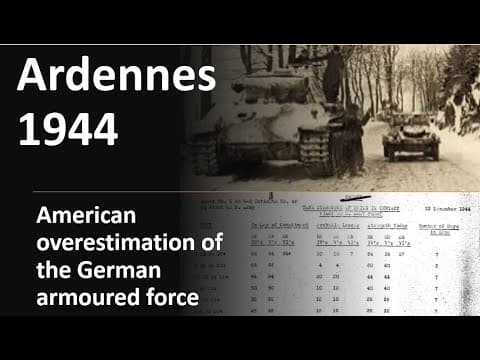
The American perception of the German Army's strength during the Ardennes Offensive in December 1944 was significantly inflated, leading to an overreaction by Allied command and a misallocation of resources. This blog post explores the details of these miscalculations and their implications on the battlefield.
The Ardennes Offensive, launched by Germany in December 1944, took the American forces by surprise. Despite believing that the German Army was exhausted after five years of warfare and a series of defeats in the summer of 1944, the German High Command had managed to assemble a formidable strategic reserve. This blog post delves into how American intelligence misjudged the size and strength of German forces during this critical period.
The American military command was caught off guard by the scale of the German Ardennes Offensive. They had underestimated the German capabilities, believing that the army was depleted. However, the Germans had lined up a significant number of divisions for the attack, including:
In addition to these, the second echelon for the exploitation phase included:
This initial deployment led the Americans to speculate about the size of the German reserves, mistakenly believing that elite divisions from the Eastern Front had been redeployed to the Ardennes.
Despite the initial success, the German offensive began to falter within three days. The German vanguards failed to reach their objectives, and American resistance proved to be more formidable than anticipated. This situation forced the Germans to commit their second echelon earlier than planned, which was quickly identified by American forces. The premature deployment of these reserves led the Americans to believe that additional German forces were still in reserve, ready to exploit any breakthroughs.
By December 21st, the Germans had committed all their armored and mechanized units, leaving only five Volksgrenadier divisions in reserve. However, American intelligence continued to overestimate the German forces, believing there were:
Furthermore, rumors suggested the presence of more divisions, leading to a significant overestimation of the actual German strength.
The American intelligence community's miscalculations extended beyond the number of divisions. They also overestimated the tank strength of the German Panzer divisions. Initial estimates suggested that each SS Panzer division had between 120 and 128 main battle tanks, while the actual average was significantly lower. The average strength of the Panzer divisions was estimated at 106 main battle tanks, which was more than a quarter higher than the actual number.
By December 28th, American intelligence still believed that two full-strength SS Panzer divisions were ready to renew the German advance. In reality, these divisions were not present in the Ardennes, and their actual strength was less than half of what was estimated.
The consistent overestimation of German forces led to an overreaction by the Allied command. By December 25th, the German offensive had reached its limits, with no reserves or fuel to continue the advance. Despite this, the Allies continued to reinforce their positions. General Patton mobilized the full force of his Third Army, while British troops were moved to block any German attempts to cross the Meuse River.
In the weeks that followed, the Americans launched attacks against the Germans in the Ardennes, which proved to be largely unnecessary. The German bulge no longer posed a significant threat, and the German forces were exhausted, having committed their strategic reserves.
The American intelligence assessment of the German attacking strength during the first week of the Ardennes Offensive was a significant overestimation. This miscalculation led to an unnecessary concentration of Allied forces, diverting troops that could have exploited weaknesses in the German defenses elsewhere. The majority of the German mobile reserves were effectively trapped in the Ardennes, unable to influence the broader conflict.
This analysis highlights the critical importance of accurate intelligence in military operations and the potential consequences of misjudgments in assessing enemy capabilities. Let me know your thoughts on this analysis in the comments section. If you enjoyed this content, please like and subscribe, and feel free to suggest topics for future discussions.



















