
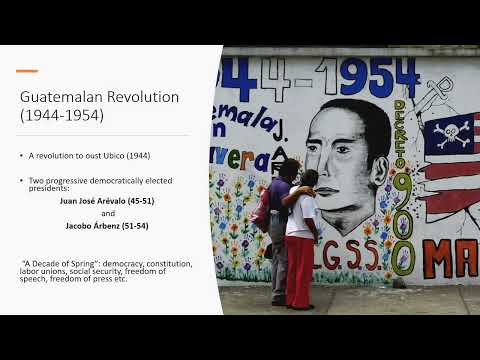
Understanding Cold War Tensions: The U.S. Intervention in Guatemala
This blog post explores the context of the Cold War, focusing on the U.S. intervention in Guatemala, a country with a rich history that faced instability due to colonialism and foreign influence.
In this lecture, we delve into the Cold War, a significant period that followed World War II, characterized by the rivalry between two superpowers: the United States and the Soviet Union. While many history classes spend considerable time on World War II, this discussion aims to shift focus to the Cold War era, particularly the U.S. intervention in Guatemala.
The Cold War Context
The Cold War emerged in the aftermath of World War II, a time when much of Europe and Asia lay in ruins. The United States and the Soviet Union stood as the two dominant powers, representing opposing ideologies: capitalism and socialism/communism. This ideological clash created a tense atmosphere that influenced global politics and led to various interventions around the world.
Guatemala: A Brief Historical Overview
Guatemala, once the heart of the Mayan civilization, has a complex history marked by colonialism and foreign intervention. Following the end of Spanish rule in the 1800s, the country did not achieve true independence. Instead, it fell into a cycle of instability, characterized by a series of dictatorships and external influences that shaped its political landscape.
U.S. Intervention in Guatemala
The focus of this lecture is on the specific case of U.S. intervention in Guatemala, which serves as a poignant example of how Cold War tensions manifested in Latin America. The United States, motivated by its desire to contain communism and promote its capitalist agenda, intervened in Guatemala's internal affairs. This intervention was not merely a political maneuver but a reflection of the broader ideological struggle of the time.
Conclusion
The story of Guatemala during the Cold War highlights the complexities of international relations and the impact of foreign intervention on national sovereignty. Understanding this context is crucial for grasping the broader implications of the Cold War and its lasting effects on countries like Guatemala. As we continue to explore this topic, questions and discussions are encouraged to deepen our understanding of this pivotal period in history.



















