
This blog post explores the history of colonial slavery in North America, its connections to the transatlantic slave trade, the brutal conditions faced by enslaved people, and the early movements towards abolitionism. It highlights the differences in slavery practices across regions, the economic motivations behind slavery, and the resistance efforts by enslaved individuals.
In this post, we will delve into the complex history of colonial slavery in North America, focusing on its development from the 1500s through the 1700s. We will also touch upon the early abolitionist movements that emerged in response to the inhumane conditions of slavery. While the primary focus will be on British North America, we will also consider the broader context of colonial slavery in the Caribbean and South America.
The transatlantic slave trade was a significant aspect of colonial slavery, with approximately 12 million enslaved people trafficked across the Atlantic. Of these, about 8 million were sent to South America, 4 million to the Caribbean, and a smaller number to North America. The demand for enslaved labor grew as European colonies became increasingly profitable, leading to a cycle of conflict and trade in West Africa, where local kingdoms traded captives for European goods.
As European colonies expanded, the demand for enslaved labor skyrocketed. Initially, West African states were able to supply captives, but as demand increased, European powers resorted to coastal raiding and illegal practices to acquire more enslaved individuals. By the late 1700s, the height of the transatlantic slave trade was reached, with millions of enslaved Africans brought to the Americas.
In North America, the primary agricultural product that relied on enslaved labor was tobacco, particularly in Virginia. The labor system that emerged was known as the gang labor system, where enslaved people worked from dawn until dusk under the supervision of overseers. This system was designed to maximize productivity and minimize the chances of rebellion by keeping enslaved individuals exhausted.
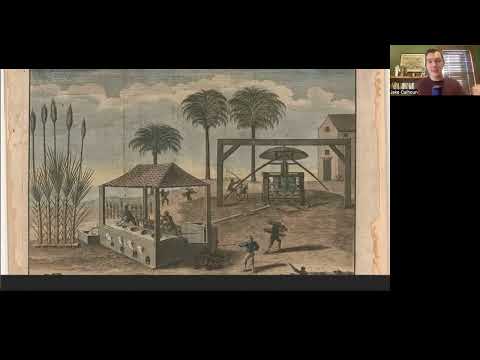
While sugar plantations in the Caribbean and South America were notorious for their brutality, the conditions in North America were also harsh. Enslaved people faced grueling work hours, inadequate food, and poor living conditions. The life expectancy of enslaved individuals on sugar plantations was alarmingly low, often ranging from three to nine years after arrival.
In the Caribbean, the demographic structure of plantations was heavily skewed towards enslaved individuals, with some colonies having over 90% of their population enslaved. This created a highly militarized environment where overseers and drivers maintained control over the enslaved population. In contrast, British North America had a different demographic and economic structure, with a slower development of plantation economies.
The British began establishing colonies in North America in the early 1600s, with Jamestown being the first successful settlement in 1607. The arrival of enslaved Africans in 1619 marked the beginning of a new labor system that would evolve over the following decades. Initially, indentured servitude was more common, but as the demand for labor increased, enslaved individuals became the preferred workforce.
As slavery became more entrenched in the British colonies, ideas about race began to solidify. Laws were enacted that defined the status of enslaved individuals and their descendants, establishing a hereditary system of slavery based on race. This codification of race was a significant development in the history of American slavery, as it justified the continued enslavement of people of African descent.
Despite the oppressive conditions, enslaved individuals resisted their circumstances in various ways. Rebellions, such as the Stono Rebellion in South Carolina and the New York Slave Revolt of 1712, demonstrated the desire for freedom among enslaved people. These uprisings were met with brutal crackdowns, but they also sparked discussions about abolitionism.
Scholars often distinguish between a "slave society"—where slavery is integral to the economy and social structure—and a "society with slaves," where enslaved individuals are present but not central to the economy. This framework helps to understand the varying experiences of enslaved people across different regions, including New England, where slavery existed but was less prevalent than in the southern colonies.
The history of colonial slavery in North America is marked by brutality, economic exploitation, and resistance. As the transatlantic slave trade reached its peak, the foundations for early abolitionist movements began to take shape. Understanding this history is crucial for recognizing the long-lasting impacts of slavery and the ongoing struggle for racial justice today.



















