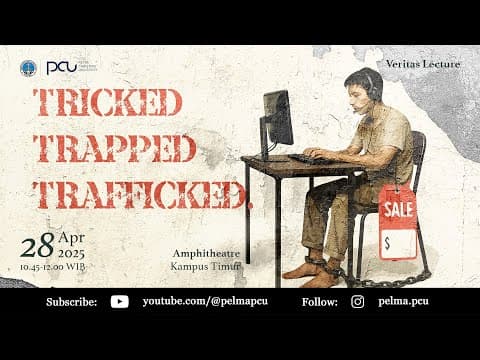
This blog post explores the alarming rise of forced cyber scamming, a form of human trafficking that deceives individuals into illegal online activities. It discusses the recruitment methods, the complexities of forced criminality, and the challenges faced by victims in escaping these situations. The post also highlights the geopolitical factors contributing to this crisis and offers advice on how to avoid becoming a victim.
In recent years, forced cyber scamming has emerged as a significant form of human trafficking, affecting thousands of individuals worldwide. This blog post delves into the complexities of this issue, exploring how victims are recruited, the nature of their exploitation, and the broader geopolitical factors at play.
Human trafficking encompasses various forms of exploitation, including forced labor and sexual exploitation. A simplified model to understand this is the action-means-purpose model, where individuals are sold, moved, or recruited through means such as force, fraud, or coercion. Notably, minors are automatically considered victims, eliminating the need to prove coercion.
Forced cyber scamming is a form of labor trafficking where individuals are deceived into taking jobs abroad, often under the guise of legitimate employment opportunities. Victims typically believe they will work in customer service, IT, or human resources, only to find themselves coerced into scamming others online.
Victims are often recruited through various channels:
Once trapped, victims are forced to engage in illegal activities, a phenomenon known as forced criminality. This complicates their legal status, as they may be arrested for crimes committed under coercion. Some countries are beginning to recognize this issue, but many still treat victims as criminals, leading to further victimization.
The rise of cyber scamming is not merely a criminal issue but is deeply intertwined with geopolitical dynamics. For instance, the establishment of special economic zones in Cambodia aimed at boosting economic growth inadvertently created environments conducive to criminal activities. The closure of casinos in 2019 led to a vacuum that traffickers exploited, transforming these spaces into scam centers.
Criminal gangs, often multinational, are behind these operations. They adapt quickly, employing ruthless tactics to recruit and exploit victims. The complexity of these operations is exacerbated by the involvement of various nationalities, with victims coming from countries like Indonesia, Taiwan, and even the United States.
Victims of forced cyber scamming come from diverse backgrounds, including those with higher education. Many are misled by the promise of lucrative jobs abroad, only to find themselves trapped in exploitative conditions. Reports indicate that victims range from young teenagers to individuals in their 40s, highlighting the widespread nature of this issue.
Once in scam centers, victims face severe restrictions on their freedom. They are often subjected to physical and psychological abuse, with punishments for underperformance including physical violence and even death threats. The living conditions are typically poor, and victims are forced to work long hours under duress.
Recovering victims from these situations is fraught with challenges. Many governments lack the resources or frameworks to effectively address the complexities of forced cyber scamming. Victims often find themselves in legal limbo, facing potential criminal charges for actions taken under coercion.
Despite the grim realities, there have been positive developments. Governments and NGOs are beginning to recognize the plight of these victims, leading to increased efforts for recovery and repatriation. For instance, recent initiatives have successfully repatriated hundreds of individuals from scam centers in Myanmar and Cambodia.
To avoid falling victim to forced cyber scamming, individuals should:
Forced cyber scamming is a complex and growing crisis that requires awareness and action from individuals and communities. By understanding the mechanisms of recruitment and the experiences of victims, we can better protect ourselves and support those affected by this heinous crime. It is crucial to foster a culture of vigilance and empathy, ensuring that victims receive the help they need to recover and reintegrate into society.