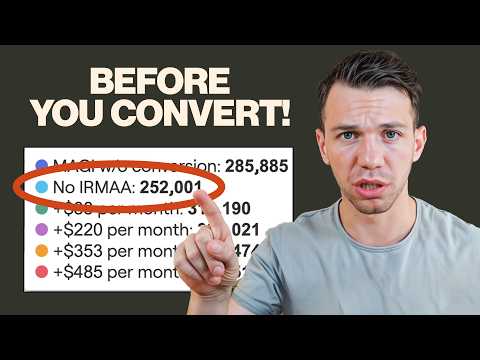
This blog post explains the importance of understanding IRMAA (Income-Related Monthly Adjustment Amount) in relation to Roth conversions. It highlights common mistakes individuals make when planning their retirement income and offers strategies to optimize tax efficiency while avoiding unnecessary Medicare premium surcharges.
When discussing retirement planning, one term that often confuses individuals is IRMAA, which stands for Income-Related Monthly Adjustment Amount. This is not a reference to a hurricane but rather a significant factor that can affect your Medicare premiums if you do not optimize your tax strategy. In this post, we will explore what IRMAA is, how it impacts your retirement planning, and the common mistakes people make regarding Roth conversions.
IRMAA is an additional charge that some Medicare beneficiaries must pay based on their income. It is determined by looking back at your modified adjusted gross income (MAGI) from two years prior. For example, if you are 58 today, your income from when you were 56 will dictate your Medicare premiums starting at age 65.
The IRMAA charges can vary significantly based on your income level. For instance:
These additional costs can accumulate over time, potentially costing you hundreds of thousands of dollars throughout your retirement if not managed properly.
Many retirees are unaware of how their income affects their Medicare premiums. This lack of knowledge can lead to significant financial consequences. For example, if you have a substantial amount in a pre-tax 401(k) and do not plan your withdrawals carefully, you may find yourself in a higher tax bracket, leading to increased IRMAA charges.
At age 72, retirees must begin taking required minimum distributions (RMDs) from their retirement accounts. These distributions can significantly increase your taxable income, which in turn can trigger higher IRMAA charges. For instance, if you have a $4 million portfolio with a large portion in pre-tax accounts, your RMDs could push your income to levels that incur substantial IRMAA fees.
One common strategy to mitigate these issues is through Roth conversions. A Roth conversion involves transferring funds from a traditional retirement account to a Roth IRA, which can provide tax-free growth and withdrawals in retirement. However, it is crucial to approach this strategy carefully.
Many individuals mistakenly believe that doing a large Roth conversion will always be beneficial. However, this can backfire if it pushes your income into a higher bracket, resulting in increased IRMAA charges. For example, if you are currently in the 22% tax bracket and decide to convert a significant amount, you may inadvertently increase your income to a level that incurs additional Medicare premiums.
The key to effective retirement planning is finding the right balance between managing your tax burden and minimizing IRMAA charges. It is essential to evaluate your overall financial situation, including your spending needs and potential income sources, before deciding on the amount to convert.
Understanding IRMAA and its implications on your retirement income is crucial for effective financial planning. By being aware of how your income affects your Medicare premiums and making informed decisions about Roth conversions, you can avoid unnecessary costs and optimize your tax strategy. Always consult with a financial professional or CPA to tailor a plan that suits your specific needs and circumstances.
In summary, prioritize minimizing IRMAA charges while considering the benefits of Roth conversions to ensure a financially secure retirement.