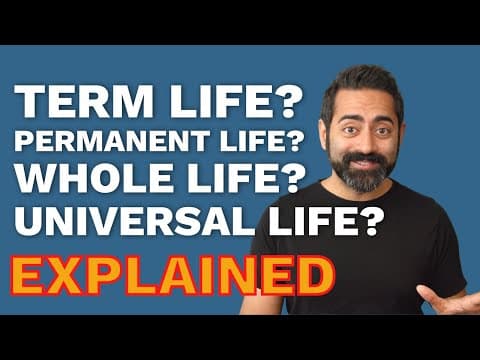
This blog post explains the differences between various types of life insurance, including term life, whole life, universal life, and variable life insurance. It covers how premiums are determined, the benefits of each type, and the implications of choosing one over the others. The post also discusses the importance of understanding mortality rates and the financial strategies associated with life insurance policies.
Life insurance is a crucial financial product that provides security for your loved ones in the event of your death. However, with various types of life insurance available, it can be challenging to understand which policy best suits your needs. In this post, we will explore the differences between term life insurance, whole life insurance, universal life insurance, and variable life insurance, along with the underlying concepts that influence their pricing.
Before diving into the specifics of each type of life insurance, it is essential to understand mortality rates. Mortality rates increase exponentially with age, meaning the likelihood of dying increases as one gets older. For instance, in the United States in 2016, the odds of a 40-year-old man dying within the next year were 0.242%. This rate increases to 0.253% for a 41-year-old and 0.266% for a 42-year-old. This exponential increase in mortality rates is a fundamental concept that affects life insurance premiums.
If you were to purchase a one-year life insurance policy every year, the cost would rise significantly as you age. For example, a $250,000 coverage policy might cost $10 per month for a 20-year-old, $20 for a 40-year-old, and could skyrocket to $1,000 for an 80-year-old. This illustrates why most people opt for longer-term policies rather than annual renewals.
Term life insurance is designed to provide coverage for a specific period, typically ranging from 10 to 30 years. During this term, the premium remains constant, making it more affordable than permanent insurance options.
For example, a 30-year-old might purchase a 10-year term life insurance policy with a $250,000 death benefit for $15 per month. After the initial term, the premium would increase significantly for the next term. This type of insurance is often referred to as temporary insurance, as it is suitable for those who need coverage for a limited time, such as while raising children or paying off a mortgage.
Whole life insurance is a type of permanent insurance that provides coverage for the insured's entire life, as long as premiums are paid. The premiums are generally higher than term life insurance, but they remain level throughout the policyholder's life.
One of the key features of whole life insurance is the cash value component. A portion of the premium goes into a cash value account, which grows over time. This cash value can be borrowed against or withdrawn, providing a financial resource for the policyholder.
Whole life insurance can be categorized into participating and non-participating policies. Participating policies allow policyholders to receive dividends based on the insurance company's performance, while non-participating policies do not offer this benefit but typically have lower initial premiums.
Universal life insurance offers more flexibility than whole life insurance. It allows policyholders to adjust their premiums and death benefits over time, making it a versatile option for those whose financial situations may change.
There are several types of universal life insurance:
Variable life insurance combines features of both term and whole life insurance. It allows policyholders to invest the cash value in various investment options, such as mutual funds, which can lead to significant growth or losses.
While variable life insurance can offer higher returns, it also comes with increased risk. Policyholders must be comfortable with the potential for their cash value to fluctuate based on market performance.
In summary, understanding the different types of life insurance is crucial for making informed financial decisions. Term life insurance is ideal for temporary needs, while whole life insurance provides lifelong coverage with a cash value component. Universal life insurance offers flexibility, and variable life insurance allows for investment opportunities. Each type has its advantages and disadvantages, and the right choice depends on individual circumstances and financial goals. As you consider your options, remember to evaluate your needs carefully and consult with a financial advisor if necessary.