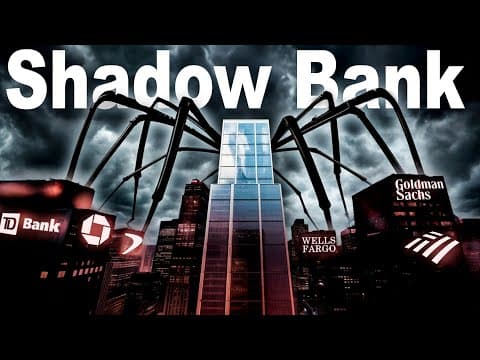
Shadow banks have become increasingly important in the financial system, filling roles left by traditional banks post-2008 crisis. While they enhance credit distribution, their lack of regulation and transparency raises concerns about systemic risks and vulnerabilities.
In the world of finance, names like Citigroup and JP Morgan are well-known, but the roles of shadow banks and their operators often remain obscure. Shadow banks, such as BlackRock and Rocket Mortgage, play a crucial role in the financial ecosystem, especially in the wake of the 2008 financial crisis. This article delves into what shadow banks are, their significance, and the implications of their growing influence.
Shadow banks are financial entities that operate similarly to traditional banks but do not have the same regulatory oversight. They include investment firms, money market funds, and other financial institutions that provide credit and liquidity without taking deposits. Unlike traditional banks, shadow banks do not create money; instead, they extend credit and manage risks, relying on wholesale funding markets for their operations.
The emergence of shadow banks can be traced back to the aftermath of the 2008 financial crisis. As regulated banks retreated from certain lending activities due to increased regulations and legacy issues, shadow banks stepped in to fill the void. They have since become integral to the financial system, facilitating credit distribution and intermediation.
Shadow banks have taken on significant responsibilities in the financial landscape. They provide essential services such as:
Shadow banks operate through a complex web of wholesale markets. They do not take deposits but instead rely on short-term funding sources, such as repurchase agreements (repos), to finance their activities. This structure allows them to leverage their operations and extend credit efficiently. However, it also creates vulnerabilities, as their funding is contingent on the stability of these wholesale markets.
Despite their benefits, shadow banks pose significant challenges for regulators. The lack of transparency and oversight raises concerns about systemic risks. Key issues include:
In November 2023, U.S. financial regulators acknowledged the growing footprint of shadow banks in the financial system. They expressed concerns that oversight has not kept pace with the rapid expansion of these entities, which could lead to unforeseen risks. The Federal Reserve reported that loans from U.S. banks to shadow banks surpassed the one trillion dollar mark, emphasizing their increasing significance.
Shadow banks have become a vital part of the financial ecosystem, stepping in to provide credit and liquidity where traditional banks have retreated. While they enhance the efficiency of credit distribution, their lack of regulation and transparency poses significant risks. As the financial landscape continues to evolve, understanding the role and implications of shadow banks is crucial for regulators, market participants, and the broader economy. The challenge remains to balance the benefits of shadow banking with the need for oversight to mitigate potential systemic risks.