This blog post explains the various configurations of surround sound systems, including the significance of channel numbers, the evolution of audio mixing from channel-based to object-based systems like Dolby Atmos, and the importance of proper speaker placement for optimal listening experiences.
Surround sound systems have evolved rapidly, leading to a variety of configurations that can be challenging to navigate. In this guide, we will break down the different surround sound setups, explain what the numbers mean, and help you determine the optimal configuration for your space.
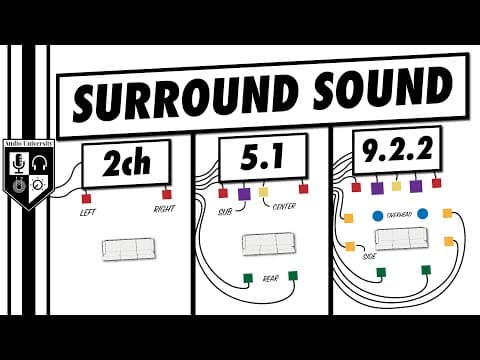
You may have encountered terms like 5.1, 7.1.2, or 9.1.2 when discussing surround sound systems. These numbers indicate the number of audio channels in a speaker system:
At the most basic level, a two-channel stereo system consists of a left and a right channel. For optimal sound, the listener should sit in an equilateral triangle formation between the speakers. This setup allows sounds to appear to come from anywhere between the two speakers by sending different signal levels to each speaker.
As you add more primary speakers, the sound canvas expands, allowing sounds to originate from all around you on a horizontal plane. For example:
As the number of primary channels increases, the listener's ability to localize sounds improves. You can even add additional LFE channels for stereo subwoofers, enhancing the low-frequency effects.
The third number in configurations like 9.2.2 indicates the number of overhead channels. These channels allow sounds to be heard from above, extending the audio experience beyond the horizontal plane. In a 9.2.2 system, there are nine primary channels, two LFE channels, and two overhead channels. Overhead sounds can be played through ceiling speakers or through speakers with up-firing drivers that reflect sound off the ceiling.
Just when you think you have a grasp on surround sound configurations, Dolby Atmos introduces a new paradigm. To understand Dolby Atmos, it's essential to look at how film audio is traditionally mixed:
This shift allows for a more immersive audio experience, as sounds can be accurately placed in a three-dimensional space, enhancing the realism of films, music, and TV shows.
Not all media is mixed in surround sound. While there are protocols to upmix audio from one format to another, the best experiences come from content that is natively mixed for surround sound. Ensuring surround compatibility throughout the signal chain is crucial; for instance, HDMI and optical connections can transmit discrete surround channels, while stereo RCA connections only support stereo.
To achieve the best audio experience, it is vital to ensure that your listening position and speaker placements adhere to established standards. For those looking to optimize their surround sound setup, resources like the audio placement guide from Audio University Online can be invaluable.
By understanding the configurations and the evolution of surround sound, you can create an audio environment that enhances your listening experience, whether for movies, music, or gaming.