This blog post explores the concepts of 'heavy feet, light hands' and 'staying aggressive over the front' in mountain biking. It explains how proper weight distribution affects traction, rollover ease, and control on the bike. The article emphasizes the importance of being weighted through the feet while maintaining a light grip on the handlebars to navigate technical terrain effectively. It also discusses the role of body positioning and pressure management in achieving optimal riding technique
Mountain biking is a sport that requires a delicate balance between control and fluidity. Two phrases often heard in the biking community are "heavy feet, light hands" and "stay aggressive over the front." But what do these phrases really mean, and how do they affect your riding? In this post, we will break down these concepts and explore their implications for traction, rollover ease, and overall bike control.
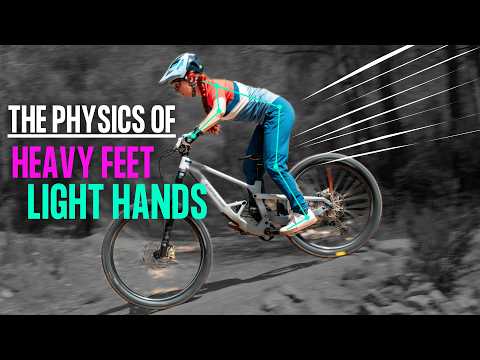
The phrase "heavy feet, light hands" refers to the ideal weight distribution while riding a mountain bike. When you are fully weighted through the pedals, your center of mass remains directly over the bike's pivot point, which is the bottom bracket. This positioning allows the bike to move naturally beneath you, absorbing bumps and adjusting to the terrain without forcing your body to move rigidly with it.
When you lean onto the handlebars, you create a rigid connection to the front of the bike. This rigidity prevents the bike from moving freely, causing your body to be pulled around as the bike navigates the terrain. This can lead to a loss of traction and control, making it difficult to flow over obstacles.
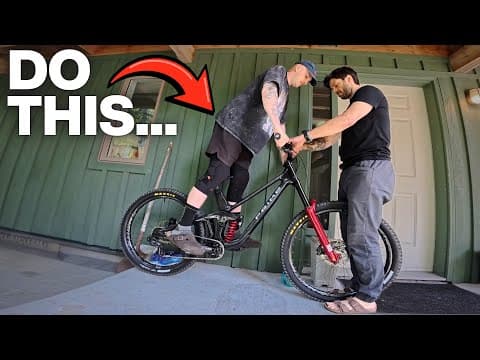
To illustrate this, consider the following: if you step onto a scale with evenly weighted pedals, your hands will feel light, yet the front wheel can still show significant weight. This demonstrates that traction on the front wheel does not need to be generated by pushing into the handlebars. Instead, it is established through proper weight distribution across the pedals.
Even slight shifts in body weight can significantly influence traction. For instance, if you shift your weight back, the front wheel becomes lighter, decreasing traction. This can manifest as a wobbly front wheel or difficulty hitting your intended line on the trail. Conversely, shifting your weight forward increases traction on the front wheel, but it comes with risks. Overloading your hands can lead to going over the bars, especially at slower speeds.
When you encounter an obstacle, such as a curb or rock, and push against the handlebars, you may find that your front wheel gets stuck. This is because excessive weight on the front wheel increases rollover resistance, making it harder for the wheel to roll over obstacles. Instead of relying on speed to overcome these challenges, it is more effective to maintain a balanced weight distribution through the feet.
When riding downhill, it is crucial to maintain a proper position for maximum control. Getting low and allowing the bike to tilt forward beneath you is one effective technique. In this position, your arms extend naturally, and your center of mass remains over the bottom bracket, ensuring stability and traction.
Thanks to modern innovations like dropper posts, riders can get lower without awkwardly sliding back. However, it is still essential to maintain a position where your hips are behind the saddle while keeping your center of mass centered over the bottom bracket. This positioning allows for optimal traction and minimal rollover resistance.
A critical skill in mountain biking is bike body separation, which involves allowing the bike to move independently of your body. This technique is essential for navigating technical terrain safely and effectively. Many aggressive riders exhibit this skill, as their bodies remain stable while the bike moves beneath them.
Top riders often appear to lean over the bars, but this is actually a result of controlled pressure management rather than simply shifting body mass forward. Riders can intentionally add pressure to the front wheel when necessary, such as when rolling over a steep rock slab. However, this pressure must be released when encountering obstacles to maintain smooth control and prevent getting stuck.
Misunderstood advice, such as the notion that one must always stay forward, can be dangerous if applied without context. It is crucial for riders to assess their weight distribution and ensure they are not overly weighted in their hands, especially when navigating rough terrain.
In conclusion, understanding the balance between heavy feet and light hands is vital for effective mountain biking. Riders should focus on maintaining a stable center of mass over the bottom bracket while keeping their hands light on the handlebars. This approach allows for better traction, smoother rollover over obstacles, and overall improved control on the bike. As you ride, continually assess your weight distribution and adjust as necessary to enhance your performance on the trails.