
This blog post explores the historical context leading to the Civil War, focusing on sectionalism, slavery, key events like the Missouri Compromise and Dred Scott decision, and the rise of abolitionism, highlighting the complex interplay of political, social, and economic factors that fueled tensions between the North and South.
Welcome to the first part of a series exploring the build-up to the Civil War in the United States. This lesson will provide a foundational understanding of the historical context, focusing on sectionalism, slavery, and abolitionism. We will also touch on significant events that contributed to the tensions leading to the Civil War.
To grasp the complexities of this era, it is essential to review some relevant historical content. The United States was characterized by a system of federalism, which divided power between the national government and state governments. This division was intended to prevent the concentration of power and corruption. However, it also led to sectionalism, where regional interests began to overshadow national concerns.
Sectionalism refers to the prioritization of regional interests over national unity. This phenomenon arose from the ongoing debate about the balance of power between state rights and federal authority. As sectionalism intensified, it created an environment where compromise became increasingly difficult, ultimately contributing to the outbreak of the Civil War.
Slavery was the primary cause of the Civil War. The inability to reach a compromise on slavery issues created a rift between the North and South. It is crucial to understand that while there were multiple factors at play, slavery was the central issue that drove the conflict.
Interestingly, the South was not always seen as the primary sectionalists. Initially, it was New Englanders who opposed various national interests, leading to early sectional divisions. However, as the nation expanded westward, the question of whether new territories would be free or slave states exacerbated tensions.
Several pivotal events shaped the landscape of sectionalism and slavery in the years leading up to the Civil War.
The Missouri Compromise was a critical moment in American history. As Missouri sought statehood, the potential imbalance between slave and free states became apparent. To maintain equilibrium, Missouri was admitted as a slave state, while Maine entered as a free state. The compromise established the 36°30' line, designating territories north of the line as free and those south as slave. This temporary solution delayed conflict but did not resolve the underlying issues.
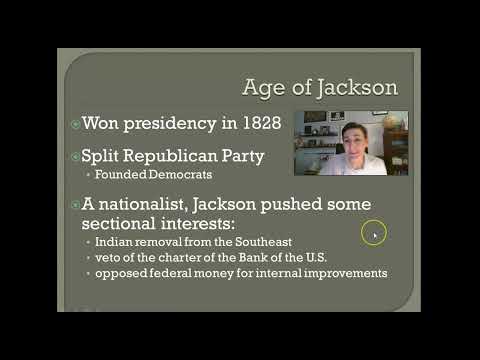
Andrew Jackson, a significant figure in this era, was instrumental in shaping the Democratic Party, which at the time was aligned with pro-slavery interests. His administration faced challenges, including the Indian Removal Act and economic policies that led to the Panic of 1837. Jackson's vice president, John C. Calhoun, was a staunch advocate for slavery and introduced the concept of nullification, arguing that states could reject federal laws.
The Dred Scott v. Sandford case further inflamed tensions. Dred Scott, a slave, sued for his freedom after being taken to a free territory. The Supreme Court ruled that no black person could be a citizen and that Congress had no authority to prohibit slavery in the territories, effectively nullifying the Missouri Compromise. This decision removed a key compromise and pushed the nation closer to war.
John Brown, an abolitionist, attempted to incite a slave rebellion through his raid on Harpers Ferry. Although he was captured and executed, his actions galvanized both abolitionists and pro-slavery advocates, leading to the formation of Southern militias that would later become the Confederate Army.
Abolitionists played a crucial role in the fight against slavery. Figures like Frederick Douglass and William Lloyd Garrison advocated for immediate emancipation. Douglass, who escaped slavery, published works that highlighted the brutal realities of slavery, while Garrison founded the American Anti-Slavery Society, calling for radical change.
The economic implications of slavery cannot be overstated. The Southern economy was heavily reliant on slave labor, particularly in cotton production. By 1860, cotton accounted for a significant portion of U.S. exports, making the institution of slavery deeply entrenched in Southern society.
The build-up to the Civil War was marked by a complex interplay of sectionalism, slavery, and political maneuvering. Key events like the Missouri Compromise, the Dred Scott decision, and John Brown's raid highlighted the growing divide between the North and South. Understanding these factors is essential for comprehending the eventual outbreak of the Civil War. In the next part of this series, we will delve deeper into the key causes of the Civil War and the changes in political parties during this tumultuous period.



















