
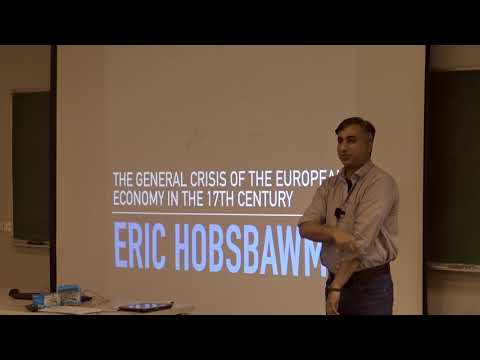
Eric Hobsbawm's analysis of the 17th century reveals a period of stagnation in Europe, where capitalism struggled to emerge due to the dominance of feudal structures, economic crises, and misinvestments, ultimately delaying the Industrial Revolution.
Eric Hobsbawm is widely recognized as one of the most significant historians of the 20th century, particularly noted for his work on the rise of capitalism in Europe. His analysis of the 17th century presents a complex picture of economic stagnation and social upheaval, challenging the notion that capitalism was a natural outgrowth of entrepreneurial spirit.
During the 17th century, Europe experienced a significant crisis that affected various regions differently. While the Mediterranean had once been a center of economic and cultural influence, it became an impoverished backwater. In contrast, countries like England, the Netherlands, Sweden, and Russia appeared to advance, albeit with notable exceptions. Overall, there was no major increase in population or production across Europe, leading to a general sense of stagnation.
The Mediterranean and Baltic regions, which were once vital trading areas, saw a decline in trade volume. The Baltic shifted its staple exports from foodstuffs to timber, metals, and naval stores, while traditional imports of Western woolens diminished. The East India trade languished until the 1630s, when profits peaked before declining for decades. The collapse of the Dutch West India Company in the 1640s and the English Africa Company in the 1670s further exemplified this economic downturn.
The 17th century was marked by social revolutions and civil wars across Europe. Notable events included the Fronde in France (1648-1653), the Catalan and Neapolitan revolutions, and the Portuguese revolts, all of which highlighted the crisis of the Spanish Empire. The English Revolution of 1648 and the Glorious Revolution of 1688 were pivotal moments that reflected the broader social unrest of the time.
The period was characterized by wild oscillations between boom and depression, famines, epidemics, and other signs of profound economic trouble. Hobsbawm suggests that while the Thirty Years' War contributed to these crises, the long-term damage caused by the wars has often been exaggerated. The question arises: why did the expansion of the late 15th and 16th centuries not lead directly into the industrial capitalism of the 18th and 19th centuries?
Hobsbawm argues that the obstacles to capitalist expansion were not purely technical or organizational. The capitalist system was still subservient to feudalism, which limited its growth. Businesses adapted to operate within a feudal framework, often becoming parasitic rather than transformative. The profit motive alone did not lead to the necessary social and technical revolutions required for capitalism to flourish.
A significant factor in this stagnation was the misinvestment of capital. For instance, the Medici family, despite being the wealthiest bankers in Europe, misallocated their resources, investing in unproductive ventures rather than in innovations that could drive economic growth. This pattern of unproductive investment was not unique to Italy; it was prevalent across Europe, where capital was often directed towards ventures that did not yield technological advancements or societal benefits.
The persistence of feudal structures in Eastern Europe further complicated the emergence of capitalism. Trade often reinforced feudalism rather than undermining it, as Western European imports and Eastern European exports benefited a small number of magnates at the expense of the peasantry. This dynamic stifled the development of a vibrant capitalist economy.
Despite the challenges of the 17th century, the conditions for a capitalist economy were laid down in the preceding century. However, the feudal system proved resilient, adapting to the emerging capitalist forces rather than being dismantled by them. Hobsbawm concludes that while capitalism was present, it was not yet robust enough to break free from feudal constraints.
The fundamental lesson from Hobsbawm's analysis is that the profit motive, trade, and financial development do not automatically result in capitalism. A multitude of social factors must be considered to understand how capitalism develops. The stagnation of the 17th century serves as a reminder that economic growth can be impeded by entrenched social structures and misaligned investments.
Hobsbawm's insights into the 17th century crisis reveal a complex interplay of economic, social, and political factors that delayed the emergence of capitalism in Europe. Understanding this historical context is crucial for comprehending the eventual rise of industrial society and the multifaceted nature of economic development. The lessons learned from this period continue to resonate in contemporary discussions about economic growth and societal progress.



















