
This blog post explores the historical context and impact of cultural genocide against Native Americans, focusing on the assimilation policies, boarding schools, and the lasting effects on Native communities today.
The struggles faced by Native American communities today, including poverty and loss of identity, are deeply rooted in a history of cultural genocide. This blog post delves into the historical context of these struggles, particularly focusing on the assimilation policies implemented by the United States government and their devastating effects on Native American cultures.
Haskell Indian Nations University, located in Lawrence, Kansas, is a significant institution for Native American education, serving students from around 140 different tribes. Established in 1884 as the United States Indian Industrial Training School, it was originally intended to assimilate Native Americans into Anglo-American society. The students were often forcibly taken from their families, stripped of their cultural identities, and subjected to harsh living conditions. Many were unable to return home, having lost their languages and cultural practices.
The history of Native Americans can be divided into two main eras: the War Period and the Assimilation Period. The War Period involved numerous conflicts between Native Americans and European settlers, culminating in significant loss of life and land. Following this, the Assimilation Period marked a systematic effort to erase Native American identities through forced cultural assimilation.
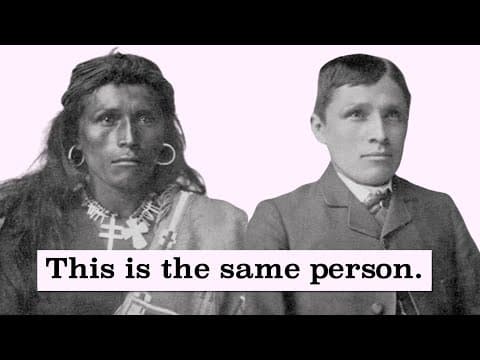
Cultural assimilation refers to the process by which a minority culture is absorbed into the dominant culture. During the Assimilation Period, Native Americans were coerced into abandoning their traditions, languages, and identities in favor of Anglo-American culture. This process was not only traumatic but also aimed at dismantling the communal structures that were vital to Native American societies.
The U.S. government, influenced by figures like George Washington and Thomas Jefferson, believed that Native Americans needed to be "civilized". This led to the establishment of boarding schools designed to indoctrinate Native American children. The first of these schools, the Carlisle Indian Industrial School, was founded in 1879 by Richard Henry Pratt, who advocated for the complete Americanization of Native students.
Life in these boarding schools was often brutal. Students faced physical punishment for non-compliance, and many suffered from neglect and abuse. The schools aimed to erase Native identities by enforcing English language use, cutting hair, and prohibiting traditional practices. Tragically, many children died due to poor living conditions and lack of medical care, with their families often unaware of their fates.
The Dawes Act of 1887 further exacerbated the situation by promoting individual land ownership among Native Americans, which contradicted their communal land practices. This act led to the loss of approximately 90 million acres of Native land, as it opened up surplus lands to non-Native settlers. The act not only stripped Native Americans of their land but also undermined their social structures and identities.
The impact of these assimilation policies is still felt today. Approximately 25% of Native Americans live in poverty, the highest rate among any minority group in the United States. The forced assimilation and cultural genocide have led to a disconnection from traditional practices and languages, with many Native Americans struggling to reclaim their identities.
Despite the historical trauma, many Native American nations continue to preserve their cultural heritage. Institutions like Haskell Indian Nations University play a crucial role in this revival. The persistence of Native cultures today is a testament to the resilience of these communities, who continue to fight for their rights and identities in the face of ongoing challenges.
The cultural genocide of Native Americans is a painful chapter in American history that has lasting repercussions. Understanding this history is essential for recognizing the struggles faced by Native communities today. As we reflect on the past, it is crucial to support efforts aimed at restoring Native identities and rights, ensuring that the rich cultural heritage of Native Americans is preserved for future generations.



















