
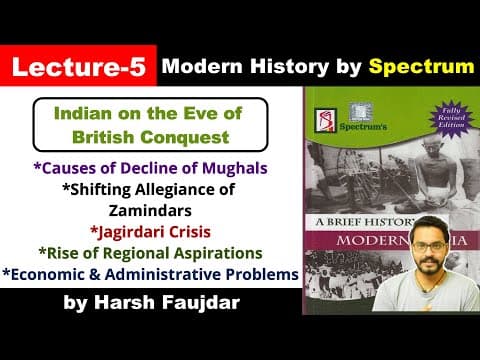
The decline of the Mughal Empire was influenced by a combination of internal and external challenges, including shifting allegiances of zamindars, a crisis in the jagirdari system, the rise of regional aspirations, and economic and administrative problems. This blog post explores these factors in detail, providing insights into the complexities of the empire's downfall.
The Mughal Empire, founded in 1526 by Babur, reached its zenith during the reign of Akbar and expanded further under Aurangzeb. However, the empire faced significant challenges leading to its decline after Aurangzeb's death in 1707. This post delves into the causes of this decline, focusing on four primary factors: the shifting allegiances of zamindars, the jagirdari crisis, the rise of regional aspirations, and economic and administrative problems.
The Mughal Empire was characterized by a centralized administrative system, where power was divided among the emperor, nobles, and zamindars. The decline of the empire can be attributed to both internal weaknesses and external pressures. Historians often debate whether the causes of decline are empire-related or region-related. Some argue that the structural issues within the empire made its decline inevitable, while others point to regional instabilities that contributed to its downfall.
Zamindars played a crucial role in the Mughal administrative system, acting as landowners responsible for revenue collection from peasants. Their power was hereditary, and they were often more loyal to their local regions than to the Mughal emperor. As Aurangzeb focused on the Deccan region, control over other parts of the empire weakened, allowing zamindars to shift their loyalties towards regional powers. This shift undermined the emperor's authority and contributed to the fragmentation of the empire.
The jagirdari system, which involved the distribution of land grants to nobles (jagirdars) in return for military service, faced significant challenges. The competition among different groups of nobles—namely the Iranian, Turani, and Hindustani factions—led to infighting and weakened the central authority. The lack of a clear succession law further exacerbated the crisis, as disputes over succession led to instability and power struggles within the court.
As the Mughal Empire weakened, regional powers began to assert their dominance. The Jats, Marathas, and Rajputs, among others, started to consolidate their power, taking advantage of the Mughal decline. The Marathas, in particular, became a formidable force, expanding their influence across large parts of India. This rise of regional aspirations was facilitated by the inability of the later Mughal rulers to maintain control over their territories.
The Mughal Empire faced severe economic challenges due to prolonged warfare, particularly during Aurangzeb's campaigns in the Deccan. The luxurious lifestyles of emperors and nobles further strained the empire's finances. Additionally, the arrival of the British disrupted trade and economic stability, leading to a decline in revenue. The centralized administrative system, which relied heavily on the emperor's capabilities, faltered under weak rulers, making it difficult to manage the vast empire effectively.
The decline of the Mughal Empire was a complex process influenced by various interrelated factors. The shifting loyalties of zamindars, the jagirdari crisis, the rise of regional powers, and economic difficulties all played significant roles in the empire's downfall. Understanding these causes provides valuable insights into the historical dynamics of one of the most powerful empires in Indian history. The lessons learned from this decline continue to resonate in discussions about governance and power dynamics in contemporary contexts.



















