
This blog post explores the complexities of the Great Depression and the New Deal, detailing the various criticisms of the New Deal, the rise of unions, the impact of legislation, and the lasting legacy of these historical events on American society and government.
The Great Depression, spanning from 1929 to 1939, was a pivotal period in American history that reshaped the economy and the role of government. In this second part of our exploration, we delve into the criticisms of the New Deal, the rise of labor unions, and the lasting impacts of these events.
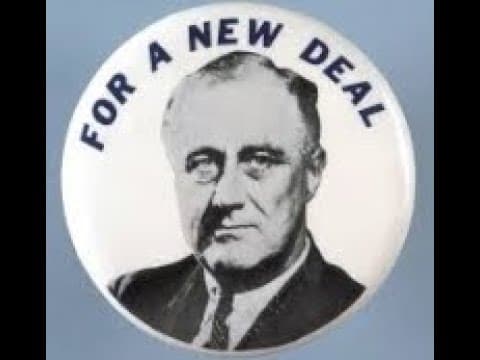
The New Deal, introduced by President Franklin D. Roosevelt (FDR), faced significant opposition from various groups.
Liberal critics argued that the New Deal did not do enough for the poor, minorities, women, and the elderly. They believed that the measures taken favored businesses over the needs of the vulnerable populations.
On the other hand, conservative critics contended that the New Deal granted excessive power to the federal government. They accused it of bordering on communism, particularly due to increased regulations, a pro-union stance, and deficit spending.
Business leaders, unhappy with the New Deal's approach, formed the American Liberty League to voice their concerns.
Several prominent figures emerged as vocal critics of the New Deal:
The New Deal faced judicial scrutiny, with the Supreme Court declaring the National Industrial Recovery Act (NRA) and the Agricultural Adjustment Act (AAA) unconstitutional. In response, FDR proposed a controversial court reorganization plan in 1937, aiming to add justices to the Supreme Court. This plan was met with outrage from both Republicans and Democrats, who viewed it as an attempt to undermine the checks and balances of government.
The New Deal also saw a significant rise in union membership, bolstered by the National Industrial Recovery Act and the Wagner Act.
The Congress of Industrial Organizations (CIO) was established in 1935, breaking away from the American Federation of Labor (AFL). Unlike the AFL, which primarily represented skilled white male laborers, the CIO welcomed all workers, regardless of skill or race. They employed innovative tactics like sit-down strikes to secure workers' rights.
This act established crucial labor regulations, including:
Despite initial recovery, the economy faced another downturn in 1937, known as the Roosevelt Recession. Unemployment had decreased from 25% to 15%, but factors like Social Security taxes and reduced government spending contributed to this setback. This period highlighted the principles of Keynesian economics, advocating for increased government spending to stimulate the economy.
The Great Depression instilled a mentality of insecurity among Americans, with many recounting tales of hardship. Women entered the workforce in greater numbers, often earning less than men. Additionally, the Dust Bowl devastated agricultural regions, prompting mass migrations to California in search of work, famously depicted in John Steinbeck's novel "The Grapes of Wrath."
African Americans faced increased discrimination, often being the last hired and first fired. The New Deal provided limited job opportunities, but figures like Eleanor Roosevelt advocated for their inclusion in federal programs.
The Indian Reorganization Act of 1934 marked a significant shift in U.S. policy towards Native Americans, reversing the Dawes Act and allowing tribes to regain control over their lands and cultural practices.
Mexican Americans also faced discrimination and economic hardship, leading to a wave of repatriation as they returned to Mexico due to job scarcity.
The New Deal fundamentally transformed the role of the federal government in American life:
The establishment of the Federal Deposit Insurance Corporation (FDIC) and the Securities and Exchange Commission (SEC) marked a shift towards government regulation of the economy to prevent future crises.
Social Security emerged as a cornerstone of the New Deal, establishing the government's responsibility for the welfare of its citizens.
The New Deal expanded the federal workforce significantly, with the number of federal employees increasing from 500,000 in 1933 to over 3.5 million by 1945. This era set a precedent for deficit spending that continues to influence government policy today.
The Great Depression and the New Deal were defining moments in American history, reshaping the economy and the relationship between the government and its citizens. The legacy of these events continues to resonate, influencing contemporary discussions on economic policy and social welfare.



















