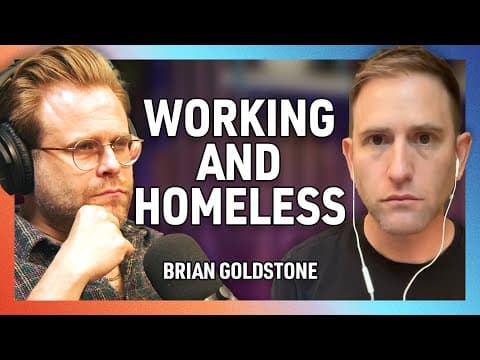
This blog post explores the often misunderstood issue of homelessness in America, particularly focusing on the phenomenon of working homeless individuals. It highlights the misconceptions surrounding homelessness, the economic factors contributing to this crisis, and the urgent need for policy changes to address the growing number of people who are employed yet still lack stable housing.
Homelessness is one of the most pressing issues in America today, yet the reality of this crisis is often misunderstood. Many people associate homelessness with visible street dwellers, but the truth is far more complex. In a recent episode of the podcast Factually, host Adam Conover speaks with journalist and anthropologist Brian Goldstone, who sheds light on the often-invisible population of working homeless individuals. This blog post delves into their conversation, exploring the misconceptions surrounding homelessness, the economic factors at play, and potential solutions to this growing crisis.
One of the most significant misconceptions about homelessness is the belief that individuals experiencing it simply need to find a job. Goldstone points out that many people assume that employment is a guaranteed pathway out of homelessness. However, this is not the case. In fact, 40 to 60% of homeless individuals are employed, yet they still struggle to afford housing. This paradox highlights the disconnect between wages and the cost of living, which has not kept pace with rising rents over the decades.
Goldstone emphasizes that homelessness is not solely caused by addiction, mental illness, or laziness, as many stereotypes suggest. Instead, it is a complex issue that often involves individuals who are working full-time jobs but still cannot secure stable housing. This reality is shocking to many, as it challenges the traditional narrative surrounding homelessness.
The common image of homelessness is often dominated by those living on the streets, but this is just the tip of the iceberg. Many homeless individuals live in motels, cars, or are temporarily staying with friends or family. These situations are often invisible to the public and are not captured in official homeless counts. Goldstone notes that the federal homeless census only counts those who are visibly homeless or living in shelters, leaving out a vast population of individuals who are struggling to find stable housing.
In his book, There Is No Place for Us: Working and Homeless in America, Goldstone follows several families in Atlanta who exemplify this hidden crisis. He argues that the true number of homeless individuals in America is likely six times higher than official estimates, revealing a much larger and more urgent problem than society acknowledges.
Goldstone's research highlights the economic factors contributing to the rise of working homelessness. Many individuals in this situation are employed in low-wage jobs that do not provide enough income to cover basic living expenses. For example, workers in the service industry, such as those at fast-food restaurants or cleaning jobs, often find themselves in precarious positions where their income is insufficient to afford rent.
Moreover, the nature of work itself has changed over the years. Many jobs now offer unpredictable hours and lack benefits, making it difficult for workers to maintain financial stability. Goldstone shares the story of a woman diagnosed with cancer who faced the impossible choice of attending chemotherapy or going to work, as missing a shift would mean losing her income and potentially her housing.
A significant aspect of the homelessness crisis is the role of private equity firms in the housing market. Goldstone explains how these firms have increasingly invested in extended-stay hotels, which have become de facto shelters for many families. These hotels often charge exorbitant rates, trapping individuals in a cycle of poverty and insecurity. The situation is exacerbated by the fact that many families are unable to secure traditional housing due to low credit scores or past evictions, forcing them into these expensive and unstable living situations.
Goldstone argues that the commodification of housing has led to a system where profit is prioritized over people. The housing market is designed to extract money from the most vulnerable, creating a cycle of homelessness that is difficult to escape.
To address the crisis of working homelessness, Goldstone advocates for a comprehensive approach that includes both immediate and long-term solutions. He emphasizes the importance of preventing homelessness before it occurs by strengthening tenant rights and protections, implementing eviction defense measures, and expanding access to affordable housing.
Additionally, Goldstone calls for a paradigm shift in how society views housing. Instead of treating it as a commodity for wealth accumulation, housing should be recognized as a fundamental human right. This shift would require significant public investment in affordable housing and a reevaluation of policies that currently prioritize profit over people.
The conversation between Adam Conover and Brian Goldstone reveals the complexity of homelessness in America, particularly the often-overlooked issue of working homeless individuals. By challenging misconceptions and highlighting the economic factors at play, Goldstone's work encourages a broader understanding of this crisis and the urgent need for systemic change. As society grapples with the realities of homelessness, it is crucial to recognize the interconnectedness of our economy and the lives of those who are struggling to find stability. Only through informed action and policy reform can we hope to address this pressing issue and create a more equitable society for all.