
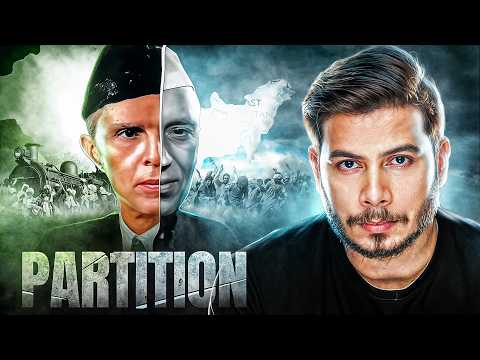
The India-Pakistan Partition was a complex event driven by political, social, and religious tensions, leading to the creation of two separate nations in 1947. This blog post explores the historical context, key figures, and the aftermath of the partition, highlighting the deep-rooted issues that contributed to this significant moment in history.
The partition of India in 1947 was a monumental event that reshaped the subcontinent, leading to the creation of two independent nations: India and Pakistan. This blog post delves into the historical context, key figures, and the aftermath of the partition, providing a comprehensive understanding of this complex event.
In the early 20th century, the Indian independence movement was gaining momentum, with various communities uniting against British colonial rule. However, the political landscape was fraught with divisions, particularly between Hindus and Muslims. The Indian National Congress, predominantly Hindu, was seen by many Muslims as a party that did not represent their interests.
Muhammad Ali Jinnah, initially a member of the Indian National Congress, later emerged as a prominent leader advocating for Muslim rights. He criticized the Congress for its Hindu-centric policies and argued that Muslims needed a separate political identity. Jinnah's vision evolved into the demand for a separate nation for Muslims, which he articulated through the All India Muslim League.
In 1905, the British colonial government partitioned Bengal, ostensibly for administrative reasons. This division, however, was perceived as a strategy to sow discord between Hindus and Muslims, leading to increased communal tensions. The partition was reversed in 1911, but the damage had been done, and the seeds of division were sown.
In response to the perceived neglect of Muslim interests by the Congress, the All India Muslim League was formed in 1906. This political party aimed to represent Muslim perspectives and demanded separate electorates for Muslims, further entrenching the divide between the communities.
The aftermath of World War II saw Britain weakened and under pressure to decolonize. The Labour government, led by Clement Attlee, announced that Britain would leave India, leading to a power vacuum and increased urgency for a resolution to the growing tensions.
The elections of 1946 were a turning point. The Muslim League won a significant majority in Muslim constituencies, solidifying its claim as the representative of Muslims in India. This electoral success emboldened Jinnah and the League, leading to a more aggressive stance for a separate nation.
On August 16, 1946, Jinnah called for a "Direct Action Day" to assert Muslim demands. This led to widespread communal riots, particularly in Calcutta, resulting in thousands of deaths and further deepening the divide between Hindus and Muslims.
Faced with escalating violence, British Viceroy Lord Mountbatten proposed a plan for partition. On June 3, 1947, it was announced that India would be divided into two independent dominions: India and Pakistan. The plan included provisions for the division of assets and the establishment of borders based on religious demographics.
The partition triggered one of the largest mass migrations in history, with millions of people crossing borders to join their respective religious communities. This migration was accompanied by horrific violence, with estimates of deaths ranging from 1 to 2 million. Families were torn apart, and communities that had coexisted for centuries were shattered.
The partition left a lasting impact on the subcontinent, with deep-seated animosities and unresolved issues continuing to affect India-Pakistan relations. The trauma of partition is still felt today, with many families recounting the horrors they experienced during this tumultuous time.
The India-Pakistan partition was not merely a political event but a complex interplay of historical, social, and religious factors. Understanding this event requires acknowledging the narratives of both communities and the leaders involved. As we reflect on this significant moment in history, it is crucial to recognize the lessons learned and the importance of fostering unity and understanding in a diverse society.



















