
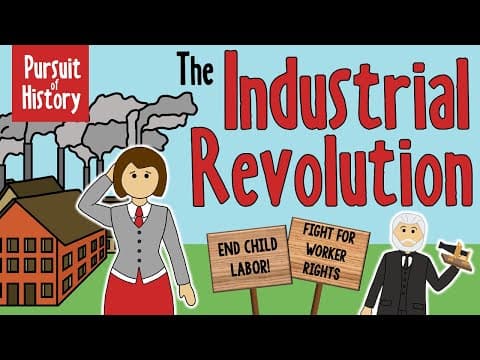
The Industrial Revolution, spanning from the late 18th to the mid-19th century, marked a significant transformation in manufacturing, transportation, and communication, primarily beginning in Britain and later spreading to the United States. This period saw the rise of machinery, the establishment of factories, and significant social changes, including labor movements and the fight against child labor and slavery.
The Industrial Revolution was a pivotal period in history characterized by significant advancements in technology, manufacturing, and communication. This era, which began in Britain from the 1760s to the 1840s, fundamentally transformed everyday life and set the stage for modern society.
Before the Industrial Revolution, goods such as clothing and other products were crafted by hand in homes and small businesses. This process was labor-intensive and time-consuming. However, as the demand for goods increased, inventors and businessmen began to develop new machinery that would enhance efficiency and productivity. The goal was clear: to produce more goods in less time, ultimately leading to greater profits.
During the first Industrial Revolution, several groundbreaking inventions emerged:
These innovations not only transformed the textile industry but also laid the groundwork for the expansion of the steel industry through improved iron production methods.
As Britain sought to maintain its technological edge, the secrets of industrial machinery eventually spread to other parts of Europe and the world. In 1793, Samuel Slater, an Englishman, established a textile mill in Rhode Island, marking the beginning of the Second Industrial Revolution in the United States. This led to a proliferation of textile factories, particularly in the Northern states, which became centers of industrial activity.
The Industrial Revolution also brought significant advancements in agriculture and transportation:
In transportation, the introduction of steam-powered locomotives and steamboats drastically reduced travel time, transforming how goods and people moved across the country. Railroads began to crisscross the landscape, connecting cities and facilitating trade.
The era also saw remarkable advancements in communication. The telegraph, which utilized Morse code, allowed for rapid message transmission over long distances. In 1876, Alexander Graham Bell made history by successfully calling his assistant, marking the dawn of the telephone.
Despite the technological advancements, the Industrial Revolution had a dark side. The rise of factories led to poor working conditions, particularly for women and children. Many factory workers endured:
The number of enslaved laborers in the U.S. also surged during this period, from approximately 500,000 in 1790 to over 3 million by the mid-1800s. Many were forced to work in agriculture under brutal conditions.
As urban areas expanded, cities became overcrowded, polluted, and lacked basic sanitation and safe drinking water. The harsh realities of factory life and the plight of enslaved individuals sparked social movements.
In response to the dire working conditions, labor unions began to form, advocating for workers' rights and better conditions. Child labor laws were introduced, and movements for abolition and women's rights gained momentum. This period marked a new revolution of social change, as people began to fight for their rights and better living conditions.
The Industrial Revolution was a complex and transformative time in history that reshaped society in numerous ways. Its impacts are still felt today, influencing modern manufacturing, labor rights, and social movements. Understanding this era is crucial to grasping the foundations of contemporary life and the ongoing struggles for equity and justice in the workplace.



















