
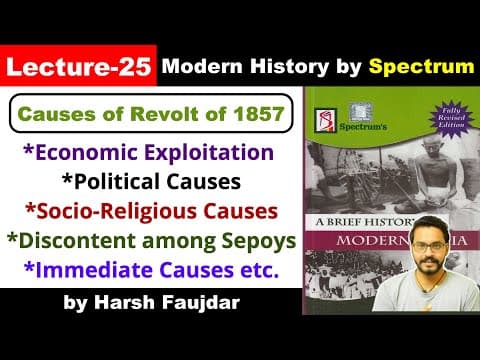
The Revolt of 1857 was a significant uprising against British rule in India, driven by economic exploitation, political oppression, administrative corruption, and socio-religious interference. This blog post explores the background and major causes leading to this pivotal event in Indian history.
The Revolt of 1857, also known as the First War of Independence, was not an isolated incident but rather the culmination of various grievances that had been building up over several decades. This blog post delves into the major causes of the revolt, providing a comprehensive overview of the economic, political, administrative, and socio-religious factors that contributed to this significant uprising against British colonial rule in India.
The Revolt of 1857 occurred exactly 100 years after the Battle of Plassey in 1757, which marked the beginning of British dominance in India. Over the century, the British expanded their control through various means, including military conquests and political strategies. This expansionist policy created widespread discontent among the Indian populace, setting the stage for the revolt.
One of the primary causes of the revolt was the economic exploitation of Indian resources by the British. The East India Company systematically disrupted traditional economic systems, monopolizing key commodities such as cotton. They manipulated prices and controlled exports and imports to maximize profits, severely impacting local artisans and craftsmen.
Heavy taxation further exacerbated the situation, as the British imposed exorbitant revenue demands on farmers, often during times of famine. This economic burden led to widespread poverty and resentment among the local population, who found themselves trapped in a cycle of debt to moneylenders, often supported by the British.
The British East India Company's aggressive expansionist policies led to numerous conflicts with local rulers. Wars against Bengal, Mysore, the Marathas, and the Sikh Empire resulted in the annexation of territories and the imposition of the Subsidiary Alliance and the Doctrine of Lapse. These policies not only stripped local kings of their power but also alienated their subjects, who felt a deep loyalty to their rulers.
The denial of succession rights to Indian princes further fueled discontent. The British often disregarded the claims of adopted heirs, leading to a loss of prestige and authority among local rulers, which in turn affected their subjects' loyalty.
Corruption within the British administration was rampant, leading to widespread dissatisfaction among the Indian populace. British officials often exploited their positions for personal gain, resulting in a lack of trust and respect from the local population. The perception that the British were only interested in profit, rather than the welfare of the people, contributed to the growing resentment.
The British interference in Indian social and religious practices also played a significant role in inciting the revolt. The introduction of Christian missionaries and the promotion of Western education were viewed with suspicion by many Indians, who feared the erosion of their traditional beliefs and practices. Laws such as the abolition of Sati and the introduction of the Widow Remarriage Act, while progressive, were met with resistance from conservative sections of society who felt their cultural identity was under threat.
Prior to the revolt, there were several military uprisings that highlighted the discontent among Indian soldiers (sepoys). Discrimination in pay and promotions, along with the introduction of the General Service Enlistment Act, which required sepoys to serve overseas, particularly angered Hindu soldiers who believed that crossing the seas would lead to a loss of caste.
The immediate cause of the revolt was the introduction of the Enfield rifle, which used cartridges greased with animal fat. This was perceived as a direct attack on the religious beliefs of both Hindu and Muslim sepoys, leading to widespread outrage and rebellion.
The Revolt of 1857 was a complex event driven by a multitude of factors, including economic exploitation, political oppression, administrative corruption, and socio-religious interference. Understanding these causes provides valuable insights into the historical context of the revolt and the deep-seated grievances that led to one of the first significant challenges to British rule in India. The revolt was not merely a spontaneous uprising but rather the result of years of accumulated frustration and anger among the Indian populace.



















