
This blog post explores the aftermath of World War II for Jewish communities, detailing their historical context, the impact of the Holocaust, the establishment of Israel, and the ongoing complexities of Jewish identity and anti-Semitism.
The aftermath of World War II marked a significant turning point for Jewish communities around the world. This blog post delves into the historical context of Jewish identity, the impact of the Holocaust, and the establishment of Israel, while also addressing the ongoing complexities faced by Jewish communities today.
Judaism is one of the three oldest Abrahamic religions, alongside Christianity and Islam. It is based on the teachings of the Torah, which comprises the first five books of the Bible: Genesis, Exodus, Leviticus, Numbers, and Deuteronomy. Jews believe in an omnipotent God who created the universe and chose the Jewish people to uphold the laws contained in the Ten Commandments.
The term "Jew" originated from the Kingdom of Judah, which consisted of two of the twelve tribes of Israel. Judaism is not only a religion but also a culture and a national identity. The formation of the State of Israel is closely tied to Jewish identity, as Jews consider themselves God's chosen people, inheriting the land promised to their ancestors.
Judaism encompasses various branches:
During World War II, the Holocaust led to the systematic persecution and murder of approximately six million Jews by the Nazis. This genocide was characterized by extreme brutality, with Jews being forced into concentration camps and subjected to inhumane conditions.
The Nazis defined Jews racially, considering anyone with Jewish ancestry as a Jew, regardless of their religious beliefs or personal identity. This classification played a crucial role in the widespread discrimination and violence against Jewish people during the war.
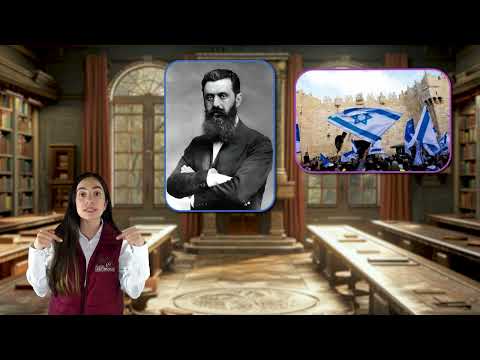
The roots of the Israeli-Palestinian conflict can be traced back to the 19th century, when nationalist sentiments began to rise among Jews, largely influenced by Theodor Herzl, the father of Zionism. Herzl argued that Jews were not merely a religious group but a national group deserving of their own state in their historical homeland.
In 1882, Jewish immigration to Palestine began, which was then part of the Ottoman Empire. The Zionist movement gained momentum, leading to the establishment of the World Zionist Organization in 1897, aimed at creating a national home for the Jewish people in Palestine.
After World War I, Britain received the Mandate for Palestine and was tasked with implementing the Balfour Declaration of 1917, which supported the establishment of a national home for the Jewish people while safeguarding the rights of non-Jewish communities.
Following the horrors of the Holocaust, support for Zionism grew significantly. In 1947, the United Nations proposed a partition plan to create separate Jewish and Arab states. Israel declared independence in 1948, leading to conflict with Arab nations and the displacement of many Palestinians.
The hatred of Jews, known as anti-Semitism, predates Hitler and the Nazis. Throughout history, Jews have faced discrimination and persecution, often being scapegoated for societal issues. During the Middle Ages, Jews were blamed for events such as the Black Plague, and their distinct identity led to further marginalization.
Hitler's anti-Semitic ideology was rooted in a belief in racial superiority and a misguided notion that Jews posed a threat to the purity of the Aryan race. This culminated in the horrific policies of the Nazi regime, which sought to eliminate the Jewish population entirely.
After World War II, Jewish survivors faced the daunting task of rebuilding their lives and communities. Many emigrated to Palestine, which became the future State of Israel, while others found refuge in the United States, Canada, Australia, and Latin America.
The establishment of Israel in 1948 provided a sanctuary for Jewish survivors and those from around the world. Despite the challenges, Jewish communities have thrived, contributing significantly to various fields, including science, economics, and politics.
Despite the resilience of Jewish communities, their situation remains complex. Within the Jewish population, there are divisions regarding support for Zionism and the policies of the State of Israel. Some Jews argue that Zionism has fueled anti-Semitism, while others view Israel as a necessary refuge.
In countries like Russia, Jews continue to face threats during times of unrest, highlighting the precariousness of their situation. The recent conflict between Russia and Ukraine saw many Jews emigrating to safer countries, including Israel.
The legacy of World War II and the Holocaust has profoundly shaped Jewish identity and community dynamics. While Jewish communities have shown remarkable resilience and have played vital roles in global society, the complexities of their history and ongoing challenges require continued attention and understanding. The interplay of historical events, cultural identity, and political realities continues to influence the Jewish experience today.



















