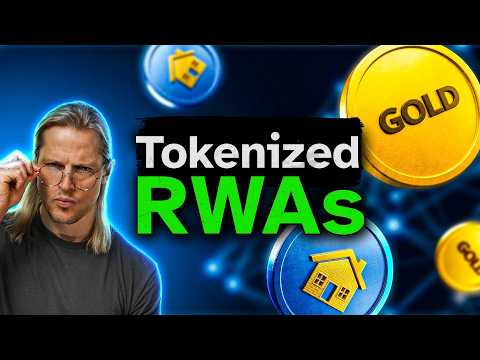
Tokenized real world assets (RWAs) are set to revolutionize the financial landscape by streamlining asset issuance and trading through blockchain technology. This blog explores how RWAs work, their types, and their potential impact on the economy, highlighting the shift from traditional finance to a more efficient digital asset ecosystem.
Once upon a time, many believed that cryptocurrency was the future of finance. Today, however, it's becoming clear that crypto will just be one niche in a broader ecosystem of digital assets. This ecosystem is poised to be dominated by tokenized real world assets (RWAs). Despite their significance, many people do not understand what RWAs are, how they work, or why they matter. In this blog post, we will explore everything you need to know about tokenized RWAs, including their mechanics and the types to watch out for.
Tokenized real world assets are digital representations of physical assets on a blockchain. They can include anything from stocks and bonds to real estate and commodities. The key feature of RWAs is that they are backed by tangible assets, which distinguishes them from traditional cryptocurrencies that often lack intrinsic value.
To understand RWAs, it is essential to first grasp how asset issuance and trading currently function. For instance, if you want to issue a stock in the United States, you typically need:
Once approved, the stock is listed on an exchange, where a complex network of intermediaries facilitates trading. This includes broker-dealers, stock exchanges, and clearing agencies, all of which ensure the legitimacy of trades and ownership changes.
In contrast, issuing a tokenized RWA involves a much simpler process. Currently, there are no established regulations for RWAs in the U.S., but proposals from the SEC suggest that basic disclosures will be required, such as:
Once these disclosures are made, an RWA can be issued on a blockchain, which functions as a shared database. Unlike traditional databases, changes to a blockchain require consensus from its participants, enhancing security and transparency.
The traditional asset issuance process is lengthy and involves numerous intermediaries. In contrast, RWAs can streamline this process significantly. For example, the SEC could approve the minting of an RWA token once the necessary documents are verified. Trading can also be simplified, as all participants on the blockchain can verify transactions without needing intermediaries.
The automation capabilities of blockchain technology mean that many roles currently filled by intermediaries can be eliminated. This leads to faster and more efficient trading processes, allowing for quicker access to capital and reduced costs for issuers and investors alike.
There are two primary types of blockchains that facilitate RWAs:
RWAs can be classified into two categories:
Currently, most RWAs are non-native, but as the market evolves, we may see a shift towards more native RWAs as assets become increasingly tokenized.
The future of RWAs is promising, particularly as regulations evolve. In the short term, non-native RWAs on permissionless blockchains, such as precious metals and stocks, are likely to present the most opportunities. However, the long-term potential lies in native RWAs on permissioned blockchains, which will likely attract significant capital due to their compliance and security features.
An interesting dynamic is emerging with stable coins, which are often used to purchase RWAs. As countries issue more debt, RWAs could incentivize investors to buy stable coins, thereby increasing demand for government bonds. This could create a cycle where the issuance of RWAs supports government spending and stabilizes financial markets.
Tokenized real world assets are set to revolutionize the financial landscape by streamlining asset issuance and trading through blockchain technology. As regulations develop and the market matures, both native and non-native RWAs will play crucial roles in the future of finance. Investors should keep an eye on stable coin issuers and RWAs backed by historically illiquid assets, as these will likely offer the greatest opportunities for growth and speculation.
In summary, the transition to a tokenized financial system is underway, and understanding RWAs will be essential for anyone looking to navigate this evolving landscape.